
Bathroom Tile Installation
Bathroom Tile Installation in Renton
In a bathroom, tiling is a waterproofing job with a decorative finish. The membrane behind the tile and the slope of the shower floor are what stop the room failing, and both disappear the moment the tile goes on.
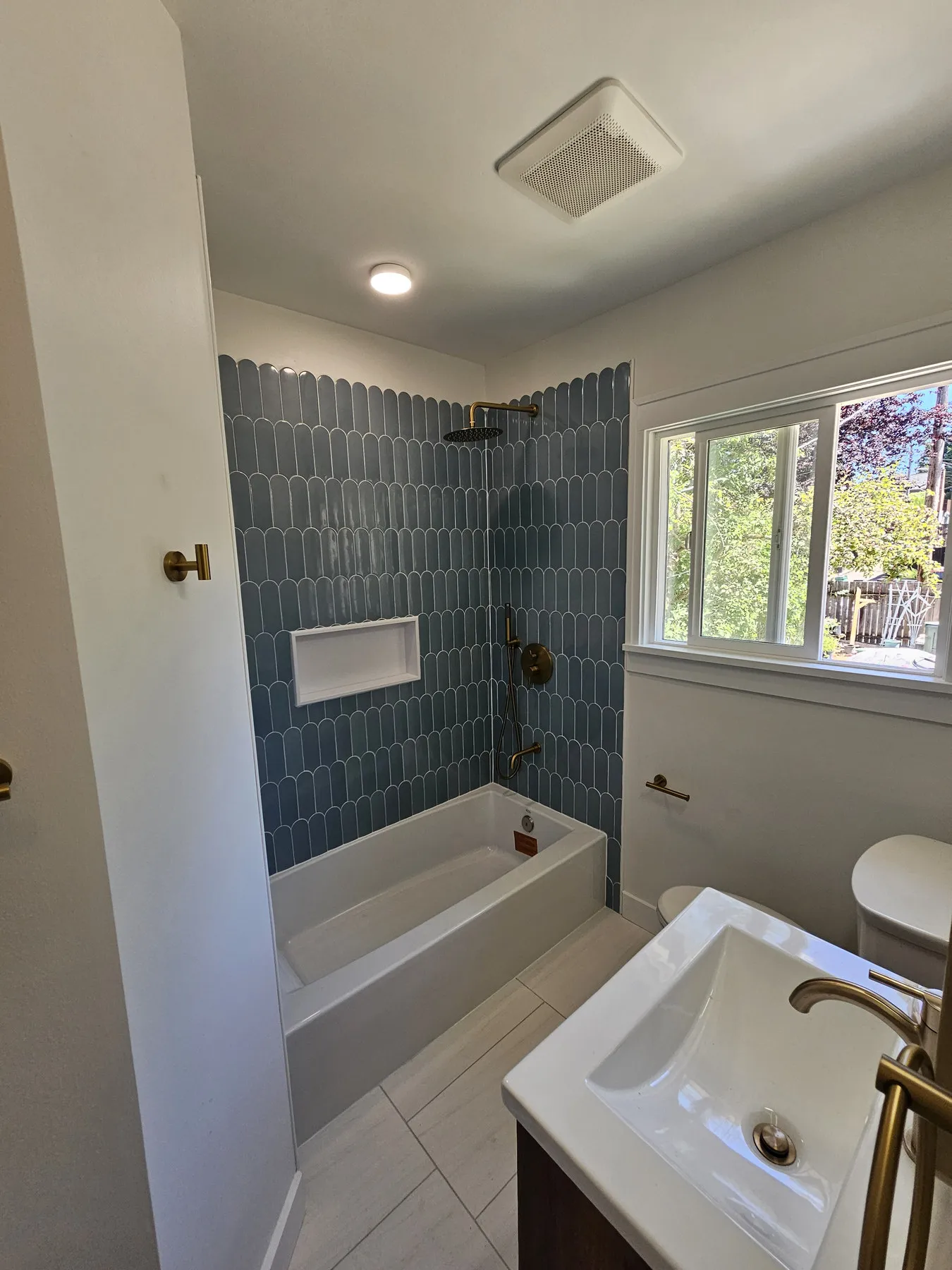
Tiling a Wet Room Is Not Tiling a Wall
Tile on a kitchen wall has to look right. Tile in a shower has to look right and keep water out of the building, and those are different jobs with different work behind them.
Tile is not waterproof and grout is less so. Cement grout is porous by nature, which is why it needs sealing and why sealing wears off. What actually keeps a shower dry is a continuous waterproof layer behind the tile, bonded and detailed so there is no path through it at the corners, at the floor-to-wall joint, or where the walls meet the curb.
Get that right and the tile is a finish. Get it wrong and the tile is a lid on a problem that will take years to surface and will have done its damage by then.
Substrate, Membrane and the Order of Work
Behind the tile goes a cement or foam backer board, fixed to sound framing. Over that goes the waterproofing, either a sheet membrane or a liquid applied in coats, with the seams and the inside corners detailed. Each layer has a curing or setting time, and those times are the reason a shower takes several days rather than two.
The shower floor is the most demanding part. It has to slope evenly to the drain with no flat areas where water can stand, and that slope is formed in the base before any tile is set. It is also why a shower floor is usually mosaic: small tiles can follow a slope in two directions at once, and a large tile cannot.
Where the room is being renovated, this all happens before tile and after rough-in. Where it is a standalone shower retile, the old tile and backer board come off first and the substrate gets inspected, because this is the only opportunity to see it.
Layout, Niches and the Things Decided Early
Tile layout in a bathroom is set out from the most visible wall and the fixtures, so that cut tiles land where they are least noticeable and full tiles land where the eye goes. The height of the first course and where the pattern lands relative to the shower curb and the niche are decisions, not defaults.
A niche is framed into the wall and waterproofed with it. It cannot sensibly be added afterwards, and its position should sit on a grout line rather than cutting across the middle of a tile. The same applies to a bench, a shampoo ledge or a recessed light.
Movement joints matter in a wet room too. Tile and the building move at different rates, and a run of tile with no provision for that will crack somewhere. Where that joint goes is chosen rather than left to chance.
Renton Bathrooms and What Comes Off the Wall
Removing old shower tile tells you what the original installer did. In houses of a certain age around Renton, that is frequently tile set on drywall with no membrane, or a mortar bed over a liner that has given up. Either way the back of the wall is often wet, and sometimes the framing is damaged.
That gets repaired before anything new goes on. It is also the reason a shower retile is quoted with the honest caveat that what is behind the tile is not visible until it comes off, and that anything found will be raised rather than covered.
Tile and grout are yours to choose and supply. The quote covers the labour and the construction materials that make it last, which is the backer board, the membrane, the thinset and the grout, and which is most of the value of the job even though none of it can be seen afterwards.
Sealing, Maintenance and What Actually Needs Doing Later
A tiled shower is not maintenance free, and it is worth knowing what it does need so that the small jobs get done and the large one never arrives.
Cement grout is porous. Sealing it slows water absorption and the sealer wears off, so it wants redoing every year or two in a shower that is used daily. That is a homeowner job rather than a trade one. Epoxy grout does not need sealing at all, which is one of the arguments for it, at the cost of being harder to install and less forgiving to work with.
Silicone is the other consumable. The joint where the shower floor meets the wall, and where tile meets a tub or a shower tray, is sealed with silicone rather than grout, because that joint moves and grout cracks when it does. Silicone lasts a few years and then wants cutting out and replacing. A black line appearing along that joint is the signal, and dealing with it promptly is the single cheapest thing anyone can do to protect a bathroom.
What should never be happening is water getting behind the tile. If grout is coming out in pieces, if a tile sounds hollow when tapped, or if there is a stain on a ceiling below, that is a waterproofing failure rather than a maintenance one, and it will not be fixed by regrouting.
Why This Is the Trade Worth Paying For
Tiling is the part of a bathroom where the gap between work that looks finished and work that is finished is widest, and where the consequences of the difference take the longest to appear.
Tile set on unsuitable substrate with no membrane looks identical on handover day to tile set properly. It costs less, it goes in faster, and it will be somebody else's problem in four years. That asymmetry is why bathrooms are the room where cheap work is most common and most expensive in the end, because the repair is not retiling. The repair is retiling plus whatever the water did to the framing in the meantime.
The practical defence is being able to see what went in before it was covered. The owner is on site most days here, and the waterproofing is checked before tile goes on it, by the person accountable for the finished room rather than by whoever installed it.
One of Five Bathroom Services
Tile work is one of five ways to work with Hunnu Construction on a bathroom. It runs as its own job, usually a shower or a floor, or as the central trade inside a full renovation. For the full bathroom remodeling service, see the main bathroom remodeling page.
Bathroom Tile Questions
- Can you tile over existing tile in a shower?
- It is possible on a wall and it is rarely the right answer. You cannot inspect or replace the waterproofing underneath, which is the part most likely to be the reason the shower is being redone, and the added thickness changes every edge and fitting.
- What goes behind the tile?
- A waterproofing membrane over a cement or foam backer board, with the joints and corners detailed so water cannot track through them. Standard drywall behind shower tile will fail, and so will tile set on backer board with no membrane.
- How is the shower floor sloped?
- To the drain, evenly, with no flat spots. Water that sits on a shower floor instead of running off it will eventually find a way through the grout. The slope is built into the base before any tile goes down, and it is the thing that distinguishes a shower floor from a bathroom floor.
- Large format or mosaic?
- Large format means fewer grout lines and a flatter look, and it needs a genuinely flat wall because the tile cannot follow a bulge. Mosaic handles curves and slopes and is the usual choice for a shower floor for that reason, at the cost of far more grout.
- Can I have a niche?
- Yes, and it is worth deciding early. A niche is framed and waterproofed as part of the wall, not cut into it afterwards, and its position should relate to the tile layout rather than fighting it.
- What about the grout?
- Standard cement grout is porous and needs sealing. Epoxy grout is waterproof and harder to work with. In a shower the choice matters more than it does on a kitchen wall, and it gets discussed rather than defaulted.
- Do you supply the tile?
- No. You choose and supply the tile, and the quote covers labour and construction materials, including backer board, membrane, thinset and grout.
- How long does a shower take?
- Several days, because waterproofing and thinset both need curing time before the next step. Rushing either is how a shower fails in year three rather than year thirty.
- How much maintenance does a tiled shower need?
- Cement grout wants resealing every year or two, which is a homeowner job. The silicone where the floor meets the wall lasts a few years and then needs cutting out and replacing. A black line along that joint is the signal to do it, and doing it promptly is the cheapest protection a bathroom gets.
- Grout is coming out of my shower. Is regrouting enough?
- Probably not. Grout failing in pieces, a tile that sounds hollow, or a stain on a ceiling below are signs of a waterproofing problem behind the tile rather than a surface one, and regrouting over that just hides it for a while.
Tile a Bathroom in Renton
Call to talk through the room, or send a few details below and Hunnu Construction will follow up to schedule a visit.
Free in-home consultation · no obligation