
Bathroom Tile Installation
Bathroom Tile Installation in Bellevue
Bathroom wall and shower tile is only as good as what's behind it — a waterproof membrane most people never see, but the single detail that decides whether a tile installation lasts fifteen years or fails in three, especially in a Pacific Northwest home where a bathroom runs humid more months of the year than not.
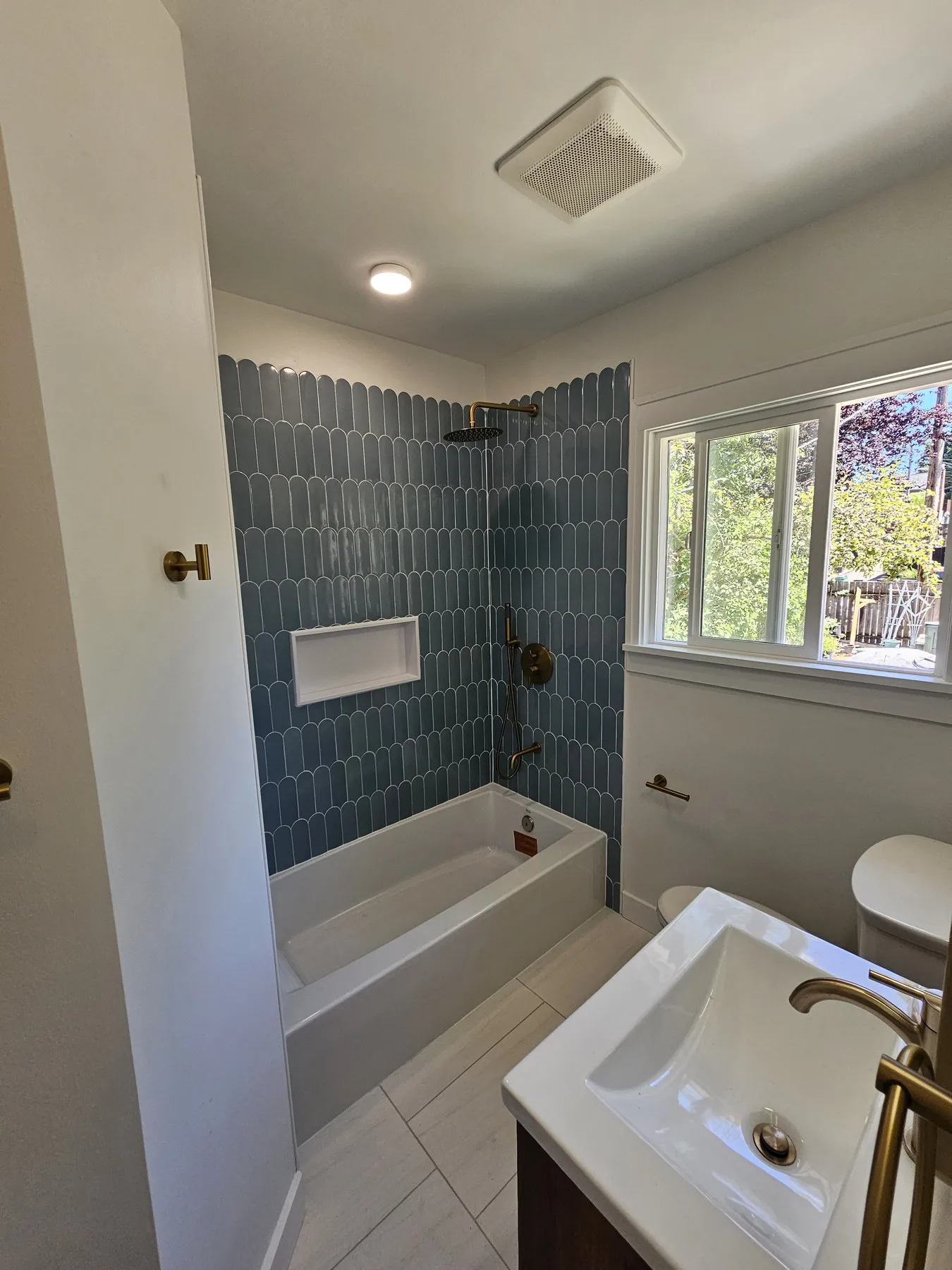
What Bathroom Tile Installation Involves
Bathroom tile — on shower walls, around a tub, or across the rest of the room — sits over a waterproof membrane that does the actual work of keeping moisture out of the wall behind it. Tile and grout slow water down, but neither is fully waterproof on its own over years of daily showers; the membrane underneath is what determines whether that slow water intrusion ever reaches the framing, and it's invisible the moment tile goes up over it, which is exactly why it's worth understanding before choosing a tile installer.
Old tile and the substrate behind it come out first, which is also when the condition of whatever waterproofing was there before becomes visible — sometimes sound, sometimes deteriorated after years of use, sometimes never properly installed in the first place. That gets addressed honestly before new tile goes up, since tiling directly over compromised waterproofing just delays a failure that new tile alone can't prevent.
Tile selection ranges as widely in a bathroom as anywhere else in the house — ceramic, porcelain, natural stone, glass, each with real differences in cost, water resistance and how they perform in a wet environment specifically. Natural stone in particular needs sealing that ceramic and porcelain don't, an ongoing maintenance detail worth knowing before it's chosen rather than discovered afterward.
Tile size affects more than the look of the finished room — larger-format tile means fewer grout lines, which is generally easier to keep clean but requires a flatter substrate to lie correctly, while smaller tile, mosaic in particular, is more forgiving of an uneven surface but comes with proportionally more grout to maintain. Both are legitimate choices, and which one actually suits a given bathroom is part of what the design consultation works through.
Waterproofing Behind the Tile
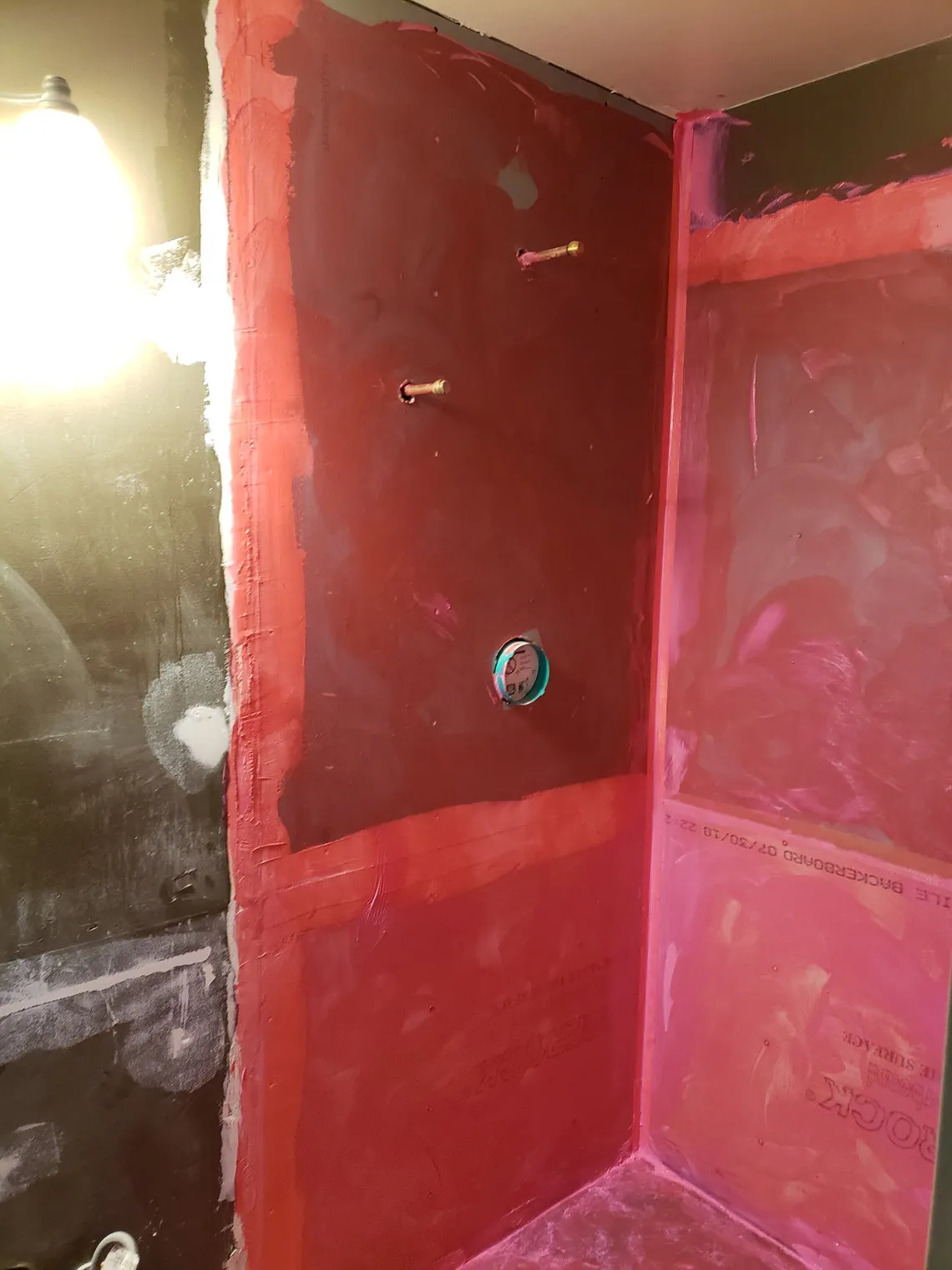
A proper shower waterproofing system is a membrane — sheet, liquid-applied, or a waterproof backer board — installed over the substrate before any tile goes up, covering every wall the shower spray reaches and extending past the shower itself in most codes. Seams, corners and any penetration for a shower valve or niche are the places this system most commonly fails if it's installed carelessly, since those are exactly the spots where a continuous membrane is hardest to maintain.
This is the part of a tile installation that's completely invisible once the job is finished and also the part most responsible for whether it lasts. A homeowner comparing tile installers on price alone has no way to see whether one of them is planning to skip or shortcut this step — it's worth asking directly what waterproofing system is being used and how it's detailed at the corners and the shower niche, rather than assuming every bid includes the same thing underneath.
A shower valve — the fixture controlling water temperature and flow — has to be sealed into the waterproofing system at the exact point it penetrates the wall, which is one more detail easy to get wrong and hard to notice until water starts finding its way behind the tile around it. Getting the valve's rough-in position confirmed before tile work starts avoids having to cut into finished tile later to fix it, which is a far more disruptive repair than getting the position right the first time.
A shower niche — the recessed shelf for shampoo and soap — is one of the more common places a shortcut shows up, since it adds corners and penetrations to a waterproofing system that's already hardest to detail at edges. A niche framed and waterproofed correctly the first time costs more in labor than skipping it or doing it carelessly, and it's exactly the kind of difference that doesn't show up until the tile has been up for a year or two.
Tile Layout, Pattern and Grout
Once waterproofing is confirmed, tile layout gets planned before the first tile is set — where the pattern starts, how it centers on the shower wall or the room, where cuts fall at corners and around fixtures. A layout planned in advance avoids an awkward sliver of cut tile ending up somewhere obvious, like the wall opposite the shower entrance where it's the first thing anyone sees.
Pattern is a real decision here too, not just tile choice — a straight running-bond layout, a herringbone pattern, a vertical stack, all read differently on the same tile, and the pattern chosen for shower walls doesn't have to match the pattern used on the floor or the rest of the room. Deciding that at the design consultation, before the layout is set, is what keeps the finished room feeling intentional rather than assembled from whatever the installer defaulted to on installation day.
Grout choice matters as much in a bathroom as it does anywhere tile is installed, and arguably more given how much moisture a bathroom's grout lines are exposed to daily. Grout color affects how the tile pattern reads — closer to the tile color for a seamless look, contrasting to make the individual tiles and the pattern the visible feature — and grout type affects how well it resists staining and moisture over years of daily showers, a maintenance consideration worth weighing alongside the color choice, especially in a shower where those grout lines never really dry out between uses.
Bathroom Tile Installation as a Standalone Project vs Part of a Renovation
A standalone tile installation makes sense when the vanity and flooring are staying — sound, the right style, simply paired with tile that's cracked, dated, or was never properly waterproofed to begin with. It's a focused project that doesn't require touching the rest of the bathroom, though it does mean living without a functional shower for part of the timeline if that's the tile being replaced.
It becomes part of a larger renovation when the vanity or flooring are changing too, since planning waterproofing and tile layout alongside those other trades — rather than around fixtures that are staying fixed — is often the cleaner approach. A homeowner unsure which situation fits their bathroom doesn't need to decide in advance; describing what's actually wrong with the current tile, and whether anything else in the room is changing, is enough for the design consultation to work from.
Either way, the same crew handles the demolition, the waterproofing and the tile work itself — rather than a tile specialist working independently of whoever assessed the waterproofing underneath, which is exactly the kind of handoff where a shortcut in one trade becomes invisible to the next until it eventually shows up as a leak nobody can trace back to its actual cause.
Part of a Complete Bathroom Remodel
Tile installation is one of five ways to work with Hunnu Construction — on its own, with the vanity and flooring staying exactly as they are, or as one trade inside a full renovation. For everything involved in remodeling a bathroom, including how the trades are sequenced and what a design consultation actually decides before tile is chosen, see the main bathroom remodeling page.
Bathroom Tile Installation Questions
- Can you retile a shower without redoing the whole bathroom?
- Yes — tile installation runs as its own project as often as it runs inside a full renovation. The vanity and flooring stay exactly as they are while only the tile changes.
- Why does waterproofing matter more than the tile itself?
- Tile and grout are not fully waterproof on their own — water gets through over time. The membrane behind the tile is what actually keeps that water out of the wall, and a tile job that skips or shortcuts it will fail regardless of how good the tile work looks.
- Do you retile just the shower, or the whole bathroom?
- Either — shower tile and the rest of the bathroom's wall tile are often chosen and installed together, but a shower-only retile is common when the rest of the room's tile is in good condition.
- How long does bathroom tile installation take?
- It depends on the area covered and whether waterproofing needs to be redone from scratch or is already in good condition behind existing tile. A shower-only retile is generally faster than a full-room tile job.
- What forms of payment do you accept?
- Checks and cash. Hunnu Construction does not currently accept credit or debit cards — worth planning around before scheduling a tile installation.
- Do you install bathroom tile outside Bellevue?
- Yes — across the Eastside, including Renton, Bothell, Redmond, Issaquah, Kirkland, Sammamish, Shoreline and Woodinville, and into the Seattle neighborhoods of Ballard and Magnolia.
- What goes under bathroom tile before it's installed?
- A waterproof membrane — sheet, liquid-applied, or a waterproof backer board — goes over the substrate before any tile is set, covering every wall the shower spray reaches. Tile and grout alone aren't fully waterproof over years of daily use.
Get New Tile Installed in Your Bellevue Bathroom
Call to talk through tile and layout, or send a few details below and Hunnu Construction will follow up to schedule a visit.
Free in-home consultation · no obligation