
Full-Scope Bathroom Renovation
Bathroom Renovation in Bellevue
A full bathroom renovation is what it takes when more than one part of the bathroom needs to change — vanity, tile, flooring and fixtures together, planned as one project rather than several separate ones.
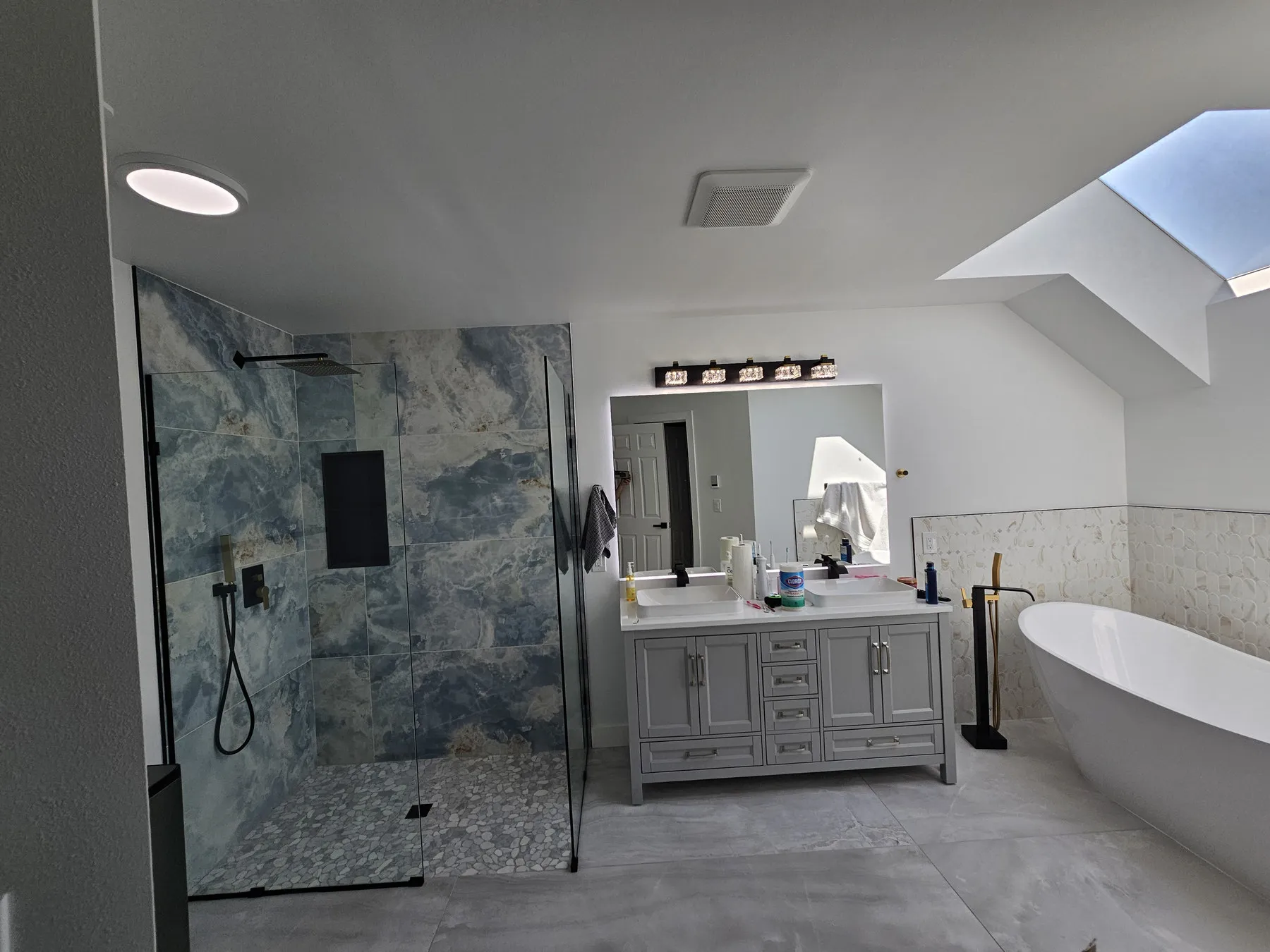
What a Full Bathroom Renovation Covers
A full bathroom renovation is the answer when the room needs more than one thing fixed — the vanity is worn out, the tile is cracked or dated, the flooring has taken on water damage, and none of it has been touched since the house was built. Rather than treat each of those as a separate project with a separate contractor, a renovation treats the room as one job: one design consultation to measure the space and choose the vanity, tile, flooring and fixtures together, and one crew that carries that plan through demolition, rough-in, installation and the final walkthrough.
That's the real difference between a renovation and a single-trade project. Replacing a vanity on its own means working around tile, flooring and a layout that all stay exactly as they are. A renovation means none of those are fixed points — the shower or tub can change, the vanity's footprint can move, and every surface in the room gets chosen to work with every other surface, rather than matched to whatever was already there. It's the right project when more than one part of the bathroom has reached the end of its life at the same time, which is common in a bathroom that's original to the house.
It's also the project type where a design consultation earns the most, because more decisions are actually open. On a single-trade job, a new vanity has to fit the existing tile and floor around it — the design conversation is mostly about the vanity itself. On a renovation, the whole layout is still a decision, which means the shower or tub, the vanity footprint, and how much of the room each fixture gets are all being decided together rather than each one working around a choice already made.
Demolition and What's Behind the Walls
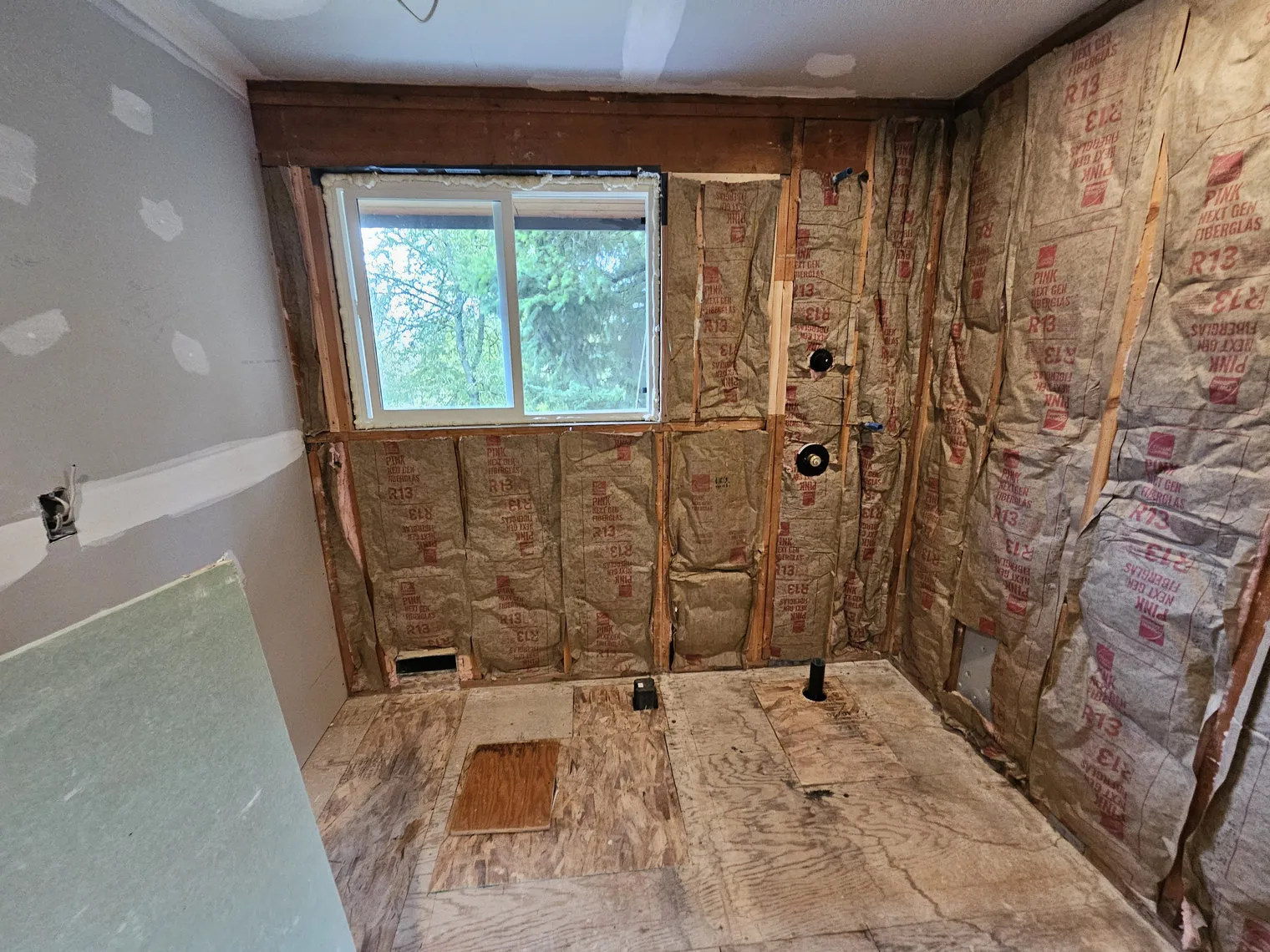
A renovation is also the project type most likely to touch what's behind the walls, which is why it starts with demolition rather than straight to installation. The old vanity, tile and flooring come out first, which is also when the crew can actually see the subfloor condition and whether years of moisture behind the tile or under the vanity have caused damage that isn't visible from the finished room.
This is the stage where a bathroom renovation genuinely differs from a kitchen one: water is a constant presence in a bathroom in a way it isn't anywhere else in the house, and demolition is often the first honest look at whether that moisture has been managed well over the years — soft subfloor near a toilet or tub, deteriorated waterproofing behind old shower tile, corrosion on supply lines that have been leaking slowly and invisibly. None of that is addressed by installing new finishes over it; it gets found and fixed here, before anything new goes back in.
Rough-in work — moving a drain for a relocated fixture, running new circuits for updated lighting or an exhaust fan — happens once demolition clears the room and before any visible trade starts. A beautiful new vanity with no outlet where the homeowner actually wanted one is a mistake made at the design stage, which is exactly why layout and fixture placement get addressed at the design consultation before demolition ever starts.
An exhaust fan gets more attention in a bathroom renovation than it would almost anywhere else, since it's what actually clears the moisture a bathroom generates every day — and an underpowered or poorly placed fan is part of why the moisture damage found during demolition happened in the first place. Sizing and placement of a new or upgraded fan is worth deciding during rough-in, not treated as an afterthought once the visible finishes are already chosen.
How the Trades Are Sequenced in a Renovation
Once rough-in is done and inspected where it needs to be, the visible trades go in, in an order that protects each one from the trade after it. The vanity typically goes in early, since the counter and sink get set against it once it's confirmed level and in its final position. Tile — on the walls, in the shower, or both — comes next, since it has to meet the vanity and the floor cleanly on both sides.
Flooring and any shower or tub work finish the room last, in the sequence that keeps water-sensitive work protected from foot traffic and material staging during the rest of the job. A renovation that skips this order — flooring installed before the shower pan is set, or tile hung before the vanity's final position is confirmed — is how a bathroom ends up with visible gaps and seams that a homeowner notices for years after the crew is gone.
Keeping one crew across every trade is what makes this sequence hold. When a homeowner books a vanity installer, then separately books a tile setter, then separately books a plumber for shower work, each new contractor is scheduling around their own calendar rather than around the renovation's — and any one of them running late pushes back everyone booked after them.
When a Full Renovation Makes Sense vs a Single Trade
Not every dated bathroom needs a full renovation. If the layout works, the vanity is structurally sound, and only one surface has actually failed — cracked tile, a floor that's showing water damage, a tub someone wants converted to a shower — replacing that one thing on its own is a smaller, faster and less expensive project, and Hunnu Construction takes those on just as often as full renovations.
A renovation is the right call when more than one of those is true at once, or when the layout itself is the problem — not enough counter space at the vanity, a tub nobody uses that would work better as a shower, a fan that's never adequately cleared moisture from the room. At that point, fixing one surface without addressing the others usually just means redoing that same surface again in a few years once the rest of the bathroom catches up to it. The design consultation is where that gets sorted out honestly — a renovation isn't sold as the answer to a problem a single trade would actually solve.
There's no wrong answer to start from. A homeowner unsure which category their project falls into doesn't need to decide before calling — that's exactly what the first walkthrough is for. Describing what's actually wrong with the bathroom — the layout, the fixtures, or both — is enough to start the conversation, and it costs nothing to find out a full renovation isn't actually needed.
Part of a Complete Bathroom Remodel
Bathroom renovation is one of five ways to work with Hunnu Construction — the others are vanity installation, floor replacement, tile installation and tub-to-shower conversion, each available as its own standalone project rather than only as part of a larger job. For the full picture of bathroom remodeling services in Bellevue, including how a renovation is sequenced trade by trade and what the design consultation actually decides before demolition starts, see the main bathroom remodeling page.
Bathroom Renovation Questions
- What's the difference between a bathroom renovation and a remodel?
- In practice, not much — Hunnu Construction uses "renovation" for a project that changes more than one part of the bathroom (vanity, tile, floor, fixtures) and treats a single-trade job, like a vanity swap on its own, as its own smaller project instead.
- Will my bathroom be unusable during the renovation?
- For part of the project, yes — demolition and rough-in mean the bathroom isn't functional for a stretch. If it's the only bathroom in the house, that's worth planning around at the design consultation, before work is scheduled.
- Will my renovation need a permit?
- It depends on the scope — moving plumbing for a relocated fixture, or electrical for a new light or fan, is more likely to need one than a cosmetic update. Ask during the design consultation whether your specific project does.
- How much does a full bathroom renovation cost?
- It depends heavily on scope — how much changes, and which materials are chosen for the vanity, tile and flooring. Every renovation gets one quote covering the whole project after the design consultation, rather than a rough estimate up front.
- Can I make design changes once demolition has started?
- It gets harder and more expensive the later it happens — a layout change after rough-in plumbing is already rerun means undoing work that's already done. Material and layout decisions made during the design consultation are what the rest of the schedule is built around.
- What forms of payment do you accept for a renovation?
- Checks and cash — Hunnu Construction does not currently accept credit or debit cards. Worth planning around before a renovation this size starts, since it's a larger total than a single-trade project.
Start a Full Bathroom Renovation in Bellevue
Call to talk through the scope, or send a few details below and Hunnu Construction will follow up to schedule a design consultation.
Free in-home consultation · no obligation