
Bathroom Floor Replacement
Bathroom Floor Replacement in Bellevue
A bathroom floor takes more water exposure than any other floor in the house, and replacing it means dealing honestly with whatever the old flooring was hiding underneath — not just laying new material over a subfloor nobody's actually checked.
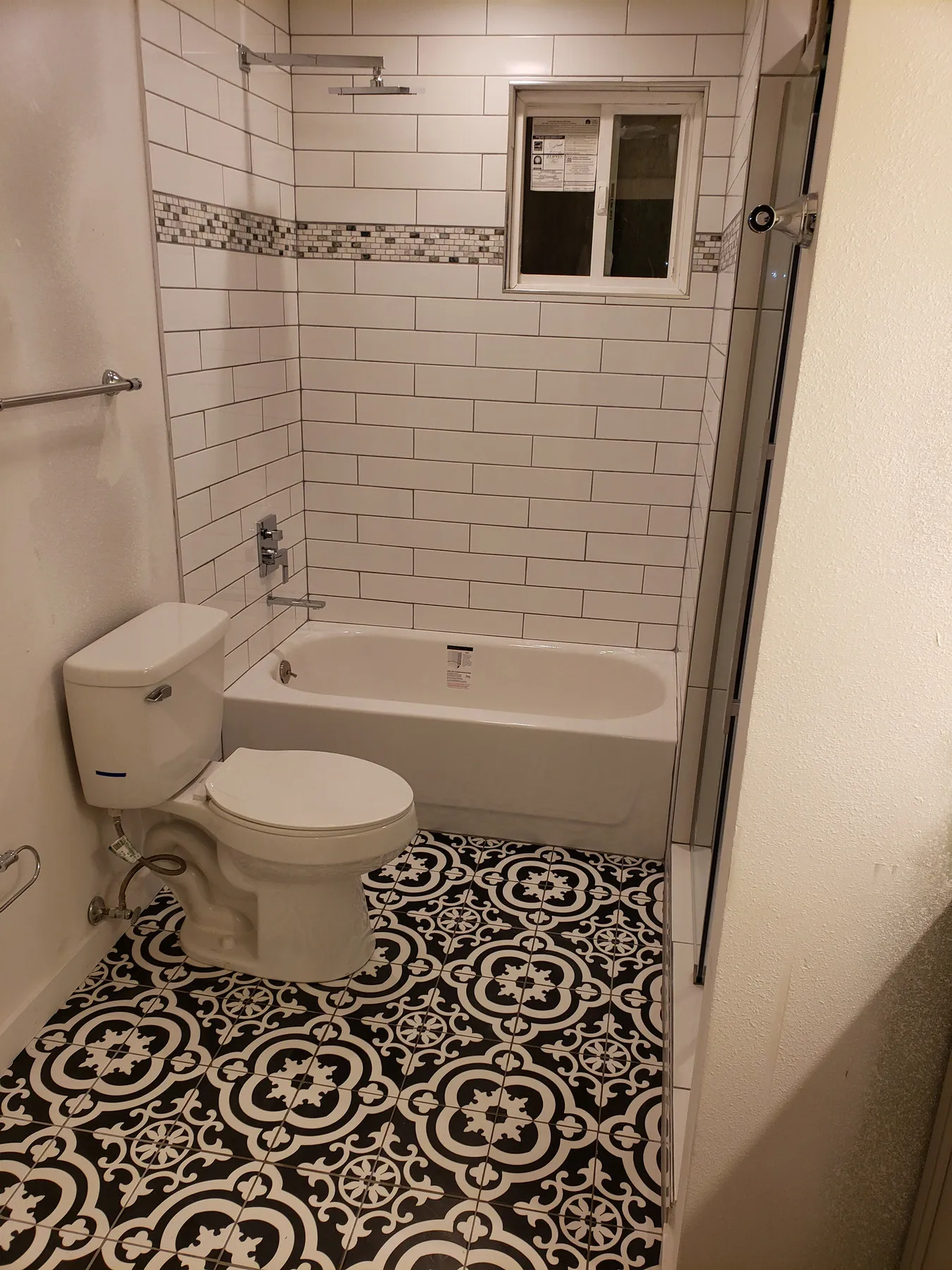
What Bathroom Floor Replacement Involves
A bathroom floor sits at the bottom of a room that generates more daily moisture than any other in the house — shower spray, a tub that gets splashed, condensation from hot water in a small space with imperfect ventilation. That constant exposure is why bathroom flooring gets fit and sealed differently than flooring anywhere else: every edge where the floor meets the tub, the shower pan, the toilet base and the vanity has to be sealed against water finding its way underneath, not just butted up against those fixtures and left alone.
The old flooring comes out first, along with the toilet, which has to be removed and reset with a fresh wax ring rather than reused once the new floor is in. That removal is also the point where the subfloor becomes visible for the first time in years, and it's checked honestly before anything new goes down — a subfloor that looks fine under old flooring can be soft or water-damaged underneath, and installing new material over that problem just delays discovering it, at a higher cost once it does surface.
Material choice in a bathroom skews toward water resistance more than it does in a kitchen — tile, vinyl and other water-resistant options are far more common here than hardwood, which struggles with the amount of moisture a bathroom sees daily even when it's a popular choice elsewhere in the house. Choosing between the options that actually make sense for a bathroom, rather than whatever looks best in a showroom, is part of what the design consultation covers.
Radiant floor heating is worth raising at that same conversation if it's something a homeowner has considered — it's installed under the new flooring before the finish material goes down, which means it has to be decided before installation starts rather than added afterward. It's not for every bathroom or every budget, but it's the kind of upgrade that's only realistic to add during a floor replacement, not after.
Subfloor Condition — What Water Exposure Actually Does
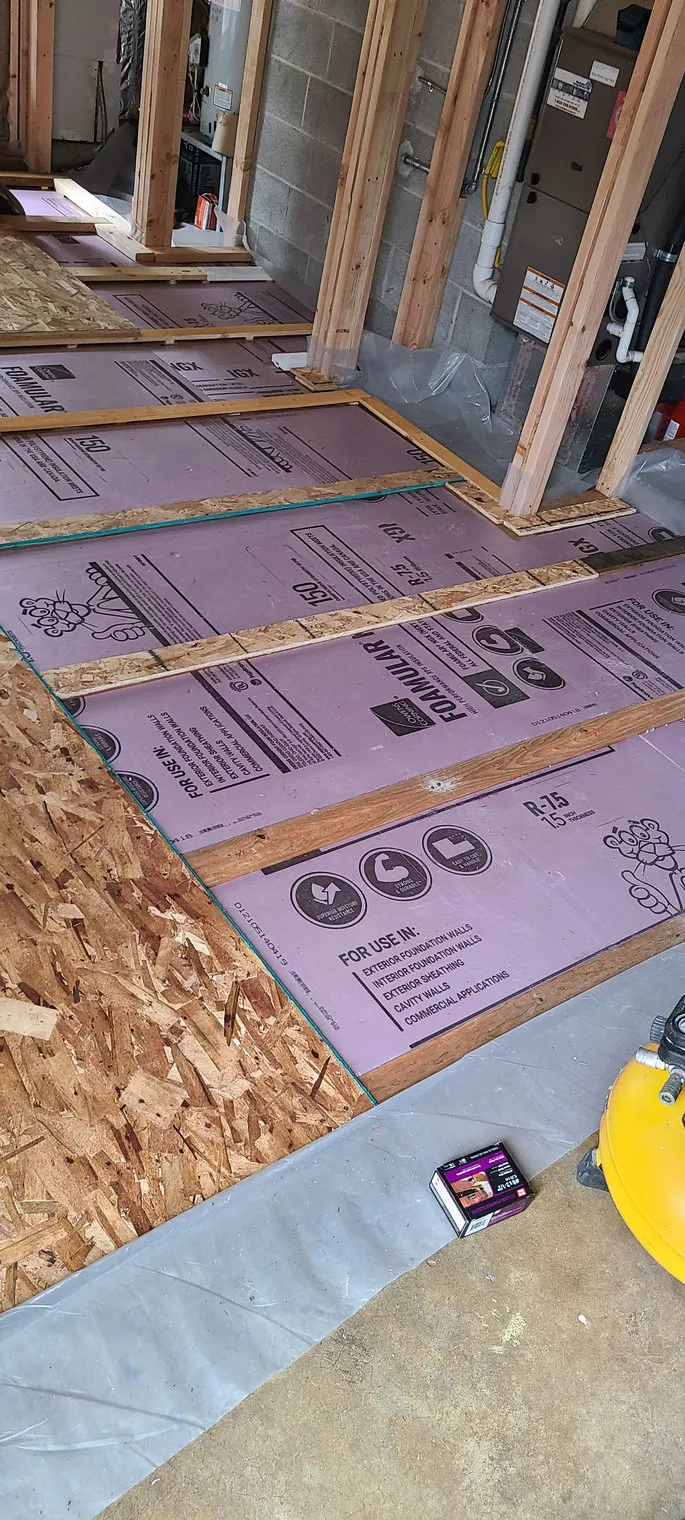
Water damage to a bathroom subfloor is rarely dramatic when it's found — it's usually a soft spot near the toilet base, discoloration around the tub or shower, or a floor that flexes slightly underfoot in a way that wasn't obvious until the old flooring was up and the subfloor was exposed. Any of those get addressed before new material goes down, since installing over a compromised subfloor just means the same failure returns, often faster the second time because the underlying problem was never actually fixed.
Leveling matters here too, and for the same reason it does in a kitchen — a hard, rigid flooring material shows an uneven subfloor far more readily than a more forgiving one does. What's different in a bathroom is that leveling compound and subfloor repair both have to account for ongoing moisture exposure once the new floor is down, not just the dry installation day itself.
The toilet flange — the fitting the toilet bolts to and seals against — is one of the most common places a slow, invisible leak originates, and it's checked and often replaced during a floor replacement regardless of whether it was the obvious reason for the project. A flange that's cracked or sitting at the wrong height relative to the new flooring is a problem worth catching now rather than after the toilet is reset and leaking again within a year.
The same goes for the wax ring underneath the toilet, which is a wear item rather than something meant to last the life of the house — resetting the toilet on a fresh ring during a floor replacement is standard practice, not an upsell, since reusing an old, compressed ring on a newly leveled floor is one of the more common causes of a slow leak nobody notices until the subfloor underneath has already been damaged again.
Material and Waterproofing
Tile is the most common bathroom floor material for good reason — it handles water well and holds up to years of daily use, though it's only as water-resistant as the grout and sealing around its edges. Vinyl plank and sheet vinyl are increasingly common alternatives, generally more forgiving of a subfloor that isn't perfectly flat and often less expensive, with tradeoffs in how the material looks and feels underfoot compared to tile.
Whatever material is chosen, the seams and edges matter more in a bathroom than the field of the floor itself. Where the floor meets the tub, the shower curb, the vanity base and the toilet flange are exactly the spots most exposed to standing water, and getting the sealant and transition details right at each of those points is what actually determines whether a bathroom floor lasts or starts showing water damage again within a few years.
A transition strip where the bathroom floor meets an adjoining hallway or bedroom is a smaller detail, but it's one more place water can migrate if it isn't sealed correctly — worth the same attention as the transitions inside the room itself, even though it's easy to treat as an afterthought once the more visible parts of the floor are done. Getting it right the first time avoids a callback for something that should have been caught on installation day rather than found later, after the room is already back in daily use and the crew has moved on to the next project.
Floor Replacement as a Standalone Project vs Part of a Renovation
A standalone floor replacement makes sense when the vanity and tile are staying — sound, the right style, simply sitting on flooring that's worn, damaged, or dated. It's a faster, more contained project than a full renovation, with the toilet reset and the new floor sealed against fixtures that aren't otherwise being touched.
It becomes part of a larger renovation when the vanity or tile are changing too, since at that point sequencing the floor alongside those other trades — rather than as an isolated swap — is both possible and often the cleaner approach, with waterproofing details planned across the whole room rather than patched around fixtures installed at different times. Neither approach is wrong on its own; which one applies depends on what else in the bathroom actually needs to change, which the design consultation sorts out honestly.
A homeowner who isn't sure which situation applies doesn't need to know in advance — describing the current floor's condition and what's prompting the question, whether that's visible damage, an outdated look, or simply age, is enough for the design consultation to work from and scope honestly.
Part of a Complete Bathroom Remodel
Floor replacement is one of five ways to work with Hunnu Construction — on its own, with the existing vanity and tile staying exactly as they are, or as one trade inside a full renovation. For how a Bellevue bathroom remodel comes together, including how the trades are sequenced and what a design consultation actually decides before anything is quoted, see the main bathroom remodeling page.
Bathroom Floor Replacement Questions
- Can you replace just the floor without touching the vanity or tile?
- Yes — floor replacement runs as its own project as often as it runs inside a full renovation. The vanity and wall tile stay exactly as they are while only the floor changes.
- What will you find when the old floor comes up?
- It depends on the bathroom and the age of the existing floor — sometimes a sound subfloor, sometimes water damage near the toilet, tub or shower where moisture has been getting through for years without being visible from above.
- Does the toilet need to come out to replace the floor?
- Yes. The toilet is removed and reset once the new flooring and any leveling work are done, with a fresh wax ring and bolts rather than reusing the old seal.
- How long does a bathroom floor replacement take?
- It depends on the material and how much subfloor repair or leveling is needed once the old floor is up. A standalone floor swap is generally faster than a full renovation, since it isn't waiting on the vanity or tile.
- What forms of payment do you accept?
- Checks and cash. Hunnu Construction does not currently accept credit or debit cards — worth planning around before scheduling a floor replacement.
- Do you replace bathroom floors outside Bellevue?
- Yes — across the Eastside, including Renton, Bothell, Redmond, Issaquah, Kirkland, Sammamish, Shoreline and Woodinville, and into the Seattle neighborhoods of Ballard and Magnolia.
- What's the best flooring material for a bathroom?
- Tile, vinyl and other water-resistant materials are the common choices, since a bathroom floor takes more daily moisture than almost any other surface in the house. Which one actually fits depends on budget, look and how the subfloor underneath is holding up.
Replace the Floor in Your Bellevue Bathroom
Call to talk through the material and condition of your current floor, or send a few details below and Hunnu Construction will follow up to schedule a visit.
Free in-home consultation · no obligation