


Call or Text
Who Should You Hire for Kitchen Remodel Design: Designer, Contractor, or Both?
Who Should You Hire for Kitchen Remodel Design: Designer, Contractor, or Both? in Bellevue —Trusted by your neighbors.
Fast, honest service with upfront pricing.

Our team is here to answer your questions and help you get started on turning your vision into reality.
How to Find the Right Kitchen Remodeler | Bellevue

Who Should You Hire for Kitchen Remodel Design: Designer, Contractor, or Both? — it’s the question most Bellevue homeowners don’t think to ask until they’re already mid-conversation with someone who only does one of those things.
You’ve started researching a kitchen remodel. Maybe you’ve gotten a contractor referral from a neighbor. Maybe you’ve been scrolling designer portfolios. But something feels unclear: who actually does what, and do you need both of them, or just one? That confusion is more common than you’d think — and getting it wrong early is exactly how projects end up over budget, behind schedule, or finished in a way that works structurally but never quite feels right.
The professionals who do this work every day in Bellevue know the difference. This guide does too. By the time you finish reading, you’ll know exactly which hire fits your project — and why it matters before anyone picks up a tool.
What’s Covered on This Page
Hiring a Kitchen Designer Alone Makes Sense in These Situations
Hiring a Contractor Alone Works for Straightforward Kitchen Projects
Do I need both a kitchen designer and a contractor for my Bellevue remodel?
What’s the biggest mistake homeowners make when hiring for a kitchen remodel?
Does Bellevue have specific permit requirements that affect kitchen remodel design?
Can a general contractor handle kitchen design on their own?
What is a design-build firm and is it a good fit for kitchen remodels in Bellevue?
What Each Professional Actually Does in a Kitchen Remodel
Most homeowners come to us confused about this part. They assume a contractor and a designer do roughly the same thing — just one draws and one builds. That’s not quite right. Mixing them up early is where a lot of Bellevue kitchen projects go sideways before a single cabinet is ordered.
Here’s a breakdown of what each role actually covers on a real job.
What a Kitchen Designer Does
A kitchen designer focuses on how the space looks, flows, and works for the people using it. They think about your cooking habits, your storage needs, how natural light hits the room in the morning, and whether your current layout is fighting against you. They produce drawings, elevations, and material selections. Cabinets, countertops, fixtures, finishes — they help you pick combinations that actually work together.
Here’s what most guides skip. A good designer also catches code and clearance issues before demolition starts. We had a client in Bellevue last spring who had already fallen in love with a peninsula layout. The designer flagged that it would block the egress path required under current IRC guidelines. That one catch saved weeks of rework — the kind of detail that comes from having worked through hundreds of kitchen projects across the Bellevue area.
Designers typically don’t manage subcontractors or pull permits. That’s not their lane. Some will do project coordination, but construction oversight is a different skill set entirely.
What a General Contractor Does
A general contractor runs the build. They pull permits, schedule the trades — plumbers, electricians, tile setters — and make sure the work passes inspection. They own the sequence of the job. Framing before drywall. Rough plumbing before tile. They catch field conditions that no drawing ever shows.
Space planning and finish selection at a professional level? Not their training. A contractor can tell you if a wall is load-bearing. Whether moving it will ruin the room’s proportions — that’s a different kind of knowledge entirely.
We see this constantly on jobs where the homeowner skipped a designer. The contractor builds exactly what they were asked to build. It works structurally. But the kitchen feels off — the island is too wide, the upper cabinets sit too high, everything is functional and nothing is comfortable. According to the National Kitchen and Bath Association, poor space planning is one of the top reasons homeowners report dissatisfaction with completed kitchen remodels.
What a Design-Build Firm Does
A design-build firm handles both sides under one roof. One team manages design and construction together. This matters more than people realize. When the designer and contractor are talking to each other daily — not through you — decisions get made faster. Budget reality hits the design process early, not after you’ve already chosen $900-per-slab quartz.
The tradeoff is fewer independent checks. With separate professionals, your designer advocates for the design and your contractor advocates for buildability. Sometimes that tension produces a better result. It depends on your project’s complexity and how much you want to manage the communication between them.
For most full kitchen remodels in Bellevue — especially older homes in neighborhoods like Bridle Trails or Somerset where kitchens were built for a different era — having design and construction aligned from day one cuts down on surprises during the build phase. In older homes particularly, it’s also worth knowing that pre-1978 construction may involve lead-based paint, and the EPA’s lead-based paint program guidance outlines what homeowners and contractors need to understand before any demolition begins.
Knowing what each professional actually controls helps you ask better questions before you sign anything. If you’re still sorting out which setup makes sense for your home, our kitchen remodel design services page walks through how we approach this with Bellevue homeowners.
Hiring a Kitchen Designer Alone Makes Sense in These Situations

Sometimes you don’t need a full team. A standalone kitchen designer is the right call when the work is mostly about planning, layout, and decisions — not swinging hammers. We see this a lot in Bellevue, especially in newer homes where the bones are solid but the kitchen just doesn’t work the way the family needs it to.
The clearest case is when you already have a contractor you trust. Maybe you’ve worked with someone before. Maybe a neighbor gave you a strong referral. You’re not starting from scratch on the build side — you just need someone to figure out what the kitchen should actually look like before the contractor shows up. A designer fills that gap without overlapping work you’ve already lined up.
Layout-only projects are another strong fit. If you’re not moving walls, not relocating plumbing, and not rewiring — but you want the space to feel completely different — a designer can accomplish that with cabinetry placement, traffic flow adjustments, and material choices alone. According to the National Kitchen and Bath Association, poor layout is the number one reason homeowners feel dissatisfied with a kitchen remodel even after spending significant money. A designer who specializes in space planning catches those problems before anything gets ordered.
We worked with a client in the Factoria area last spring who had a perfectly functional kitchen structurally. The issue was that the island blocked the refrigerator door and the prep zone was on the wrong side of the sink. No construction needed. A designer remapped the whole layout in two weeks, the contractor executed it cleanly, and the family had a kitchen that actually made sense. That’s exactly the kind of project where hiring a designer alone is the smarter move.
High-end material selection is another area where a designer earns their keep without a contractor in the room. Choosing between quartz and quartzite, understanding how cabinet door profiles interact with hardware scale, knowing which tile grout colors will look dated in five years — these are design decisions, not construction ones. A good designer has seen hundreds of finished kitchens. They know what holds up and what photographs well but disappoints in person.
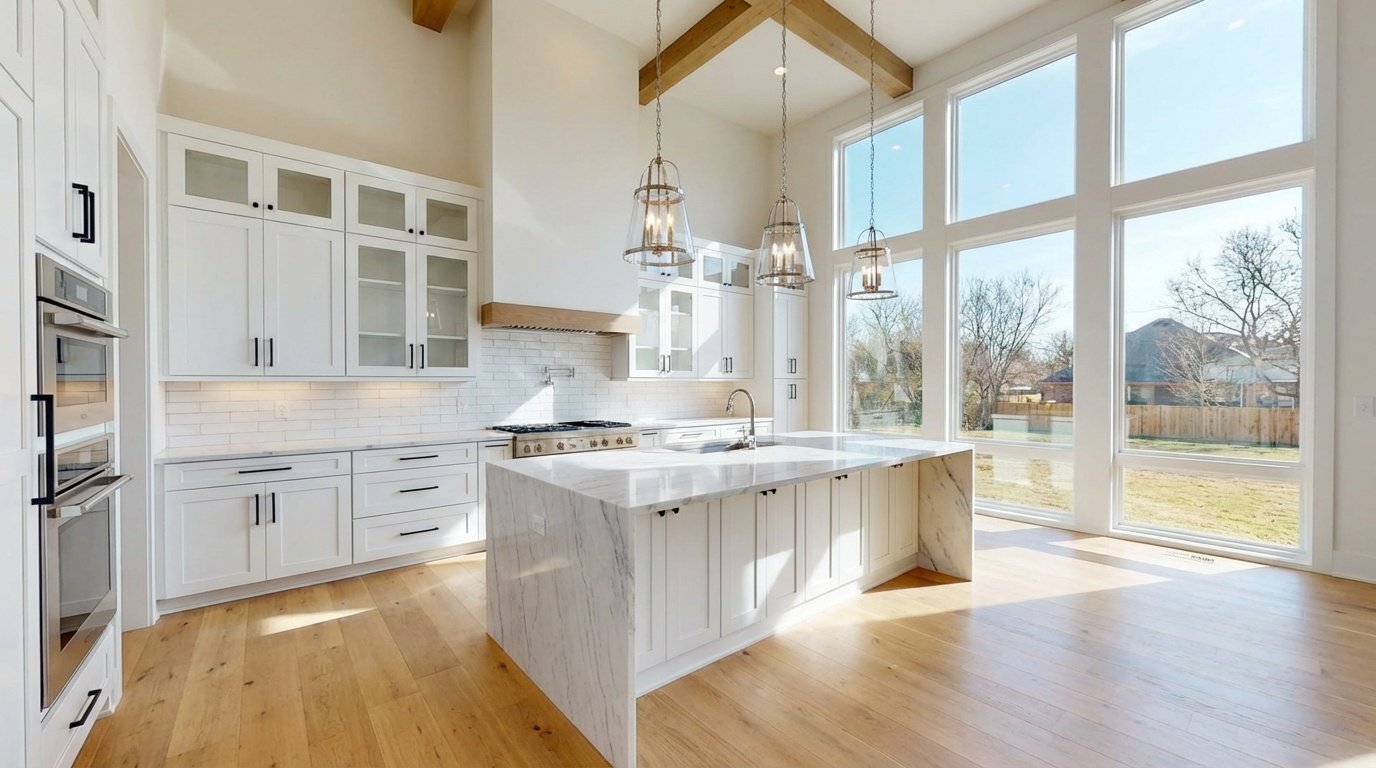
Here’s what most guides get wrong about this. They treat “hiring a designer only” like a budget move. It’s not. It’s a scope move. You hire a designer alone when the project is design-heavy and construction-light. If you’re planning a significant structural change — moving a load-bearing wall, adding a window, relocating a gas line — a designer alone isn’t enough. That’s when you need a contractor involved from the start, and possibly both working together from day one.
New construction and full gut renovations almost always need both. But a cosmetic refresh with smart layout thinking? A designer alone can carry that. We’ve seen homeowners in the Bellevue area spend months waiting for a full design-build firm to have availability — when a standalone designer could have had their project wrapped and ready for a contractor in half the time.
One more scenario worth naming: when you’re still in the early decision phase and you’re not sure what you want yet. A designer can help you figure that out before you’ve committed to a contractor or a budget direction. Think of it as getting clarity before you get quotes. According to Houzz’s annual kitchen trends report, homeowners who worked with a design professional before construction began reported higher satisfaction with the final result. That early alignment matters more than most people expect.
If any of these situations sound familiar, it may be time to talk to a kitchen remodel design professional in Bellevue about what your specific project actually needs before you start collecting contractor bids.
Hiring a Contractor Alone Works for Straightforward Kitchen Projects

Not every kitchen remodel needs a designer in the room. Some projects are simple enough that a skilled contractor can handle the whole thing — and adding a designer would just slow things down and add cost you don’t need. The key is knowing which kind of project you actually have.
A contractor works well on their own when the layout isn’t changing. Sink stays put. Stove doesn’t move. The refrigerator stays in the same corner, no walls come down. When the bones of the kitchen stay the same, a contractor knows exactly what to do without needing a design plan drawn up first.
We see this constantly in Bellevue. Homeowners want new cabinets, fresh countertops, and updated appliances — but they’re not touching the footprint. That’s a contractor job, start to finish. A good contractor has done this hundreds of times. They know the sequence, they know the subs to call, and they don’t need a designer to tell them where the upper cabinets go when they’re going back in the same spot they came from.
Here’s what typically falls into the “contractor only” category:
Cabinet replacement with the same layout
Countertop swaps (laminate to quartz, for example)
Appliance upgrades that don’t require new gas or electrical runs
Flooring replacement
Backsplash installation
Fixture and hardware updates
Painting and trim work
Most of these tasks follow a clear order. Demolition first, then rough work, then install, then finish. A contractor manages that sequence every day. You don’t need a separate design professional to create a vision document for swapping out cabinet doors.
Here’s what most guides get wrong about this. They assume “simple” means low-quality. Not true. Some of the sharpest kitchen refreshes we’ve seen in Bellevue were done by a contractor alone — no designer, no architect. The homeowner picked their materials, the contractor executed cleanly, and the result looked great. Skilled work. It just didn’t require a creative professional to map it out.
What matters is that the contractor you hire has done kitchens specifically. A general remodeler who mostly does bathrooms and basements may not have the same kitchen-specific instincts. Ask to see kitchen photos. Ask how many kitchens they’ve completed in the last year. According to the National Kitchen and Bath Association, kitchen remodels are among the most technically complex residential projects — even when the layout stays the same. You want someone who does this regularly, not occasionally.
One thing worth knowing: even on a layout-neutral project, a good contractor still makes small judgment calls that affect how things look. Cabinet reveal spacing. Tile grout line width. How the backsplash meets the window trim. These aren’t decisions that need a formal design plan — they’re field decisions a skilled contractor handles in real time. Last spring, we were on a kitchen refresh in Bellevue where the homeowner hadn’t thought about how the new tile would land at the corner window. The contractor caught it before a single tile went up and adjusted the layout on the spot. That’s experience, not design.
If your project involves new cabinetry in the same footprint, countertop replacement, and updated fixtures — and you’ve already made your material selections — a contractor alone is often the right call. You’ll move faster. And you won’t pay for a service layer you don’t need.
If you’re not sure whether your project crosses into design territory, that’s exactly the kind of question worth asking before you start.
Frequently Asked Questions
Common questions about who should you hire for kitchen remodel design: designer, contractor, or both? services in Bellevue
Do I need both a kitchen designer and a contractor for my Bellevue remodel?
It depends on your project — but most full kitchen remodels in Bellevue benefit from having both. A designer handles layout, finishes, and planning. A contractor handles permits, trades, and the actual build. When you skip one, you usually feel it in the finished result. The kitchen works but something feels off, or the build starts before the plan is solid. Our kitchen remodel design services page explains how we help Bellevue homeowners figure out the right setup before anyone picks up a tool.
What’s the biggest mistake homeowners make when hiring a kitchen remodeler?
The most common mistake is hiring a contractor before the design is done. It sounds efficient, but it usually backfires. Without a finished plan, the contractor is guessing — or waiting on decisions while the clock runs. Changes mid-build cost more and take longer than changes on paper. Getting your design locked in first gives your contractor something real to price and schedule. It also protects you from building something that works structurally but never quite feels right.
Does Bellevue have specific permit requirements that affect kitchen remodel design?
Yes, Bellevue has its own permitting process through the City of Bellevue Development Services department. Most kitchen remodels that involve moving plumbing, electrical, or walls require a permit. Older homes in neighborhoods like Bridle Trails or Somerset may also have additional considerations, including pre-1978 construction that could involve lead-based paint under EPA guidelines. A designer who knows local code catches these issues before demolition starts — not after.
Can a general contractor handle kitchen design on their own?
A contractor can make basic layout decisions, but space planning at a professional level is a different skill set. Contractors know how to build what you ask for. They don’t always know if what you’re asking for will feel right once it’s built. Poor space planning is one of the top reasons homeowners report dissatisfaction with completed kitchen remodels. If you skip a designer, you may end up with a kitchen that passes inspection but never quite works the way you hoped.
When does hiring a kitchen designer alone make sense?
A standalone designer is the right call when you already have a contractor you trust and just need someone to figure out what the kitchen should look like first. This comes up often in Bellevue with newer homes where the structure is solid but the layout isn’t working for the family. A designer fills the planning gap without duplicating work your contractor already covers. You get a finished plan your contractor can actually price and build from — without paying for services you don’t need.
What is a design-build firm and is it a good fit for kitchen remodels in Bellevue?
A design-build firm handles both design and construction under one team. For full kitchen remodels in Bellevue — especially in older homes where surprises during demo are common — having design and construction aligned from day one reduces delays and mid-project decisions. The tradeoff is fewer independent checks between your designer and contractor. If your project is complex or your home has older construction, the coordination benefit usually outweighs that. Simpler projects with a trusted contractor on board may not need the full design-build setup.
Call Hunnu Construction
Schedule your free consultation today!
Transform your outdated Bellevue kitchen into the space you've always wanted.
Monday 8 a.m.–6 p.m.
Tuesday 8 a.m.–6 p.m.
Wednesday 8 a.m.–6 p.m.
Thursday 8 a.m.–6 p.m.
Friday 8 a.m.–6 p.m.
Saturday 8 a.m.–6 p.m.
Sunday 10 a.m.–5 p.m.
Links
Terms of Use
Privacy Policy
Cookie Policy
Menu
© 2026. Hunnu Construction LLC. All Rights Reserved.