


Call or Text
Where to Start When Planning a Kitchen Remodel: A Step-by-Step Beginner’s Guide
Where to Start When Planning a Kitchen Remodel: A Step-by-Step Beginner’s Guide in Bellevue — Trusted by your neighbors.
Fast, honest service with upfront pricing.

Our team is here to answer your questions and help you get started on turning your vision into reality.
Where to Start When Planning a Kitchen Remodel: A Step-by-Step Beginner’s Guide

You’ve been staring at your kitchen long enough to know something has to change — but where do you actually begin? Maybe you’ve got a rough budget in your head, a few saved photos on your phone, and a growing list of questions you’re not sure who to ask. That feeling of not knowing your first move is exactly where most Bellevue homeowners find themselves before a remodel. And it’s exactly why this guide exists.
Where to Start When Planning a Kitchen Remodel: A Step-by-Step Beginner’s Guide is built around the same process we walk our own clients through — from defining goals before a single cabinet is touched, to understanding what your budget actually needs to cover.
Having guided Bellevue homeowners through hundreds of kitchen projects, we know where things go sideways and how to prevent it. By the time you’re done reading, you’ll have a clear sequence to follow — and a team you can trust to help you execute it.
What’s Covered on This Page
Setting a Realistic Kitchen Remodel Budget Is Your Second Step
Understanding Kitchen Layout Options Saves Time and Money Later
What is the very first step when planning a kitchen remodel?
What is the biggest mistake beginners make when planning a kitchen remodel?
How do I know if I should hire a professional or handle parts of the remodel myself?
How does Bellevue’s housing stock affect kitchen remodel planning?
How do I separate what I want from what I actually need in a kitchen remodel?
Define Your Goals Before You Touch a Single Cabinet
Most people start a kitchen remodel by picking out countertops or cabinet colors. Wrong move. Before you look at a single sample or call a single contractor, you need to know exactly why you’re doing this project. That one step — getting clear on your goals — changes everything that comes after.
Think about what’s actually bothering you right now. Is it storage? Counter space? Maybe the layout makes it impossible to cook with two people in the room. Or you’re getting ready to sell, and the kitchen looks dated compared to other homes in your neighborhood. These are very different problems. They lead to very different remodels.
We see this constantly in Bellevue: a homeowner comes to us wanting “a new kitchen,” but what they really mean is they want more light, or they want the refrigerator moved out of the corner where it blocks the pantry door. Once we nail that down, the whole project gets simpler and cheaper.
Here’s what most guides get wrong: they tell you to set a budget first. But if you don’t know your goals, your budget is just a number floating in the air. Goals come first. Budget follows. The goals tell you how much the project actually needs to cost.
Start by writing down three things:
What frustrates you most about your current kitchen
What you want the kitchen to feel like when the project is done
Whether you plan to stay in the home long-term or sell within five years
That last one matters more than people realize. According to Remodeling Magazine’s Cost vs. Value Report, a major kitchen remodel recoups roughly 38–67% of its cost at resale depending on scope and market. Selling soon? Focus on updates that photograph well and appeal to buyers broadly. Staying put? You get to optimize for how you actually cook and live.
I had a client last spring — a family in the Factoria area of Bellevue — who wanted a full gut remodel. Once we sat down and talked through their goals, it turned out the real problem was a poorly placed island that blocked traffic flow and one wall of cabinets with no pull-out shelving. We solved both problems without touching the structure. Saved them months of disruption and a significant portion of what they thought they’d need to spend.
Functional goals and aesthetic goals are both real. Don’t let anyone tell you wanting a beautiful kitchen is shallow. But try to separate them clearly in your mind. Functional goals — storage, workflow, lighting, ventilation — are harder to fix later. Aesthetic goals — cabinet finish, hardware, backsplash — are easier to update down the road. When budget gets tight, protect the functional stuff first.
Also think about who uses the kitchen and how. A household with young kids has different needs than a couple who hosts dinner parties twice a month. Someone who batch-cooks on Sundays needs more prep surface and storage than someone who mostly reheats. Your goals should reflect your actual life. Not a kitchen you saw in a magazine.
One more thing: write it down. Seriously. Put your goals in a document or even a notes app on your phone. Remodels take time, and it’s easy to get pulled in different directions by a salesperson, a contractor, or a really convincing showroom display. Having your goals written down gives you something to come back to when decisions get hard. If you’re at this stage and want a professional set of eyes on what you’ve written, it might be worth a conversation with a kitchen remodeling professional in Bellevue before you go further.
This is the foundation of knowing where to start when planning a kitchen remodel: A Step-by-Step Beginner’s Guide — and every decision after this one should trace back to what you wrote down here.
Setting a Realistic Kitchen Remodel Budget Is Your Second Step

Once you know what you want, money becomes the conversation. This is where most Bellevue homeowners get tripped up — not because they spend too much, but because they plan too little. A budget that doesn’t account for the real scope of work will stall your project halfway through.
According to the National Kitchen and Bath Association, most homeowners spend between 5% and 15% of their home’s value on a kitchen remodel. In Bellevue, where home values run high, that range can feel wide. But the percentage rule gives you a starting anchor before you call anyone.
Here’s what most planning guides won’t tell you: the visible stuff — cabinets, countertops, appliances — is only part of the cost. The work behind the walls often costs just as much. Electrical upgrades, plumbing reroutes, and structural changes add up fast. You won’t know what you’re dealing with until someone opens the wall.
We pulled a permit on a 1970s Bellevue rambler last spring and found knob-and-tube wiring behind the range wall. The homeowner had budgeted for a simple cabinet refresh. That one discovery changed the entire project scope. It happens more than people expect in older homes.
A realistic budget has three layers. The first is your base cost — what the work actually costs under normal conditions. The second is your contingency — most contractors recommend 10% to 20% of the total budget set aside for surprises. The third is your finish allowance — the money you’ll spend choosing materials, fixtures, and hardware once the structural work is done.
Skipping the contingency layer is the most common mistake we see. Homeowners lock in a number, feel good about it, then panic when the subfloor needs replacing. Build the buffer in from day one. It won’t feel as exciting as picking tile, but it will save you from stopping work mid-project.
Labor typically runs 20% to 35% of a total kitchen remodel budget, according to HomeAdvisor industry data. That number shifts depending on the complexity of your layout and how many trades are involved. A galley kitchen with no layout changes costs less in labor than an open-concept remodel that moves load-bearing walls.
Think about sequence too. Permits, demolition, and rough-in work happen before anything looks better. You’ll spend real money before you see a single cabinet go up. Homeowners who aren’t prepared for that gap sometimes feel like something is wrong. Nothing is wrong. That’s just how construction works.
Do this early: separate your “must-haves” from your “nice-to-haves” in writing. If your budget gets tight — and it might — you need a clear list of what stays and what gets cut. Quartz countertops might be a must-have. Under-cabinet lighting might be a nice-to-have. Make that call before the project starts, not during it.
Financing is a separate decision from budgeting, and we won’t get into that here. But knowing your total number before you talk to a contractor puts you in a much stronger position. You’ll get more accurate bids and have a real conversation instead of a guessing game.
The budget step is where planning becomes real. It forces you to prioritize, and that clarity makes every step after it easier. If you’re ready to move from numbers on paper to an actual plan, our kitchen remodeling services in Bellevue page walks through what to expect when you bring a contractor in.
Understanding Kitchen Layout Options Saves Time and Money Later
Most beginners skip this step entirely. They pick cabinets and countertops first, then try to make a layout work around those choices. That’s backwards. Your layout decision controls everything else — where plumbing runs, where electrical goes, how much cabinet space you actually get. Get this wrong early and you’re paying to fix it later.
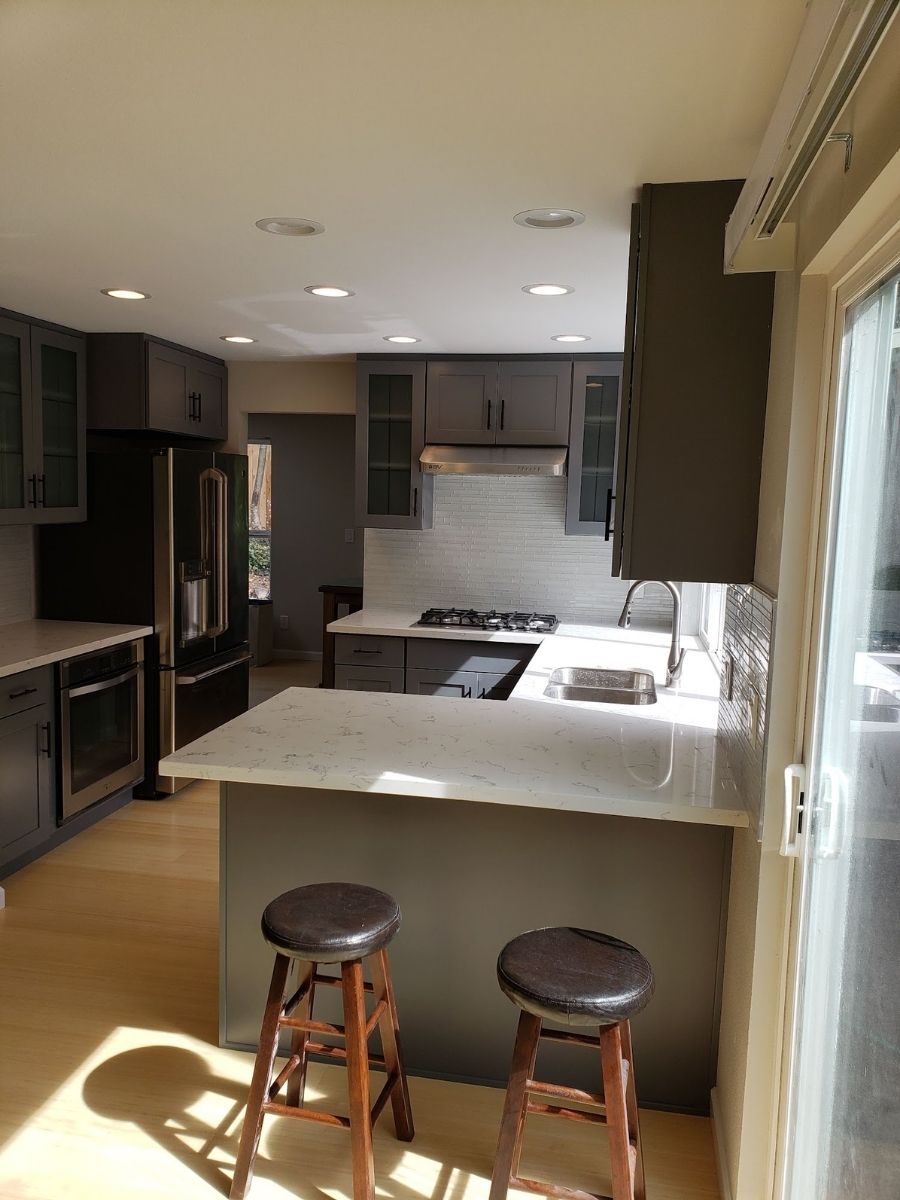
There are five common kitchen layouts: galley, L-shape, U-shape, G-shape, and open-plan. Each one works differently depending on your square footage and how your family actually uses the space. A galley kitchen is two parallel walls of cabinets and appliances — efficient for one cook, tight for two. An L-shape opens up the room and works well in smaller homes. The U-shape gives you the most counter space but needs enough room to turn around comfortably.
The G-shape is basically a U-shape with a peninsula added. We see this a lot in Bellevue homes built in the 1980s and 1990s — the footprint was there, but the layout never got updated to match how people cook today. The open-plan layout removes a wall entirely and connects the kitchen to a living or dining area. Popular, yes. But it comes with real trade-offs: less wall space for upper cabinets, more noise, and smells traveling further through the house.
Firsthand note: On a remodel we did in the Factoria neighborhood last spring, the homeowners were set on an open-plan layout. Once we mapped out where the load-bearing wall sat, the cost to remove it changed the whole budget conversation. Layout decisions and structural reality don’t always match — and that gap is exactly where experienced contractors earn their keep.
The “work triangle” is the old-school way of measuring kitchen efficiency. It connects the sink, stove, and refrigerator — the idea being that shorter distances between those three points means less walking and less wasted motion. According to the National Kitchen and Bath Association, the total of all three sides of the triangle should be between 13 and 26 feet. But here’s what most guides won’t tell you: the work triangle is becoming less useful as kitchens get bigger and more people cook at once. Two people cooking regularly? You might want two prep zones instead of one triangle.
Traffic flow matters just as much as the triangle. Think about where people walk through your kitchen to get to the back door, the garage, or the dining room. If that path cuts through your main cooking zone, you’ll feel it every single day. Sketch out the paths people walk before you commit to any layout. Ten minutes of planning can save you from a decision you’ll regret for years. If you want a broader sense of how room planning and prep work come together before any project begins, Architectural Digest’s step-by-step room preparation guide is a useful reference for understanding how sequencing decisions affect the final result.
Ceiling height affects layout too. Many Bellevue homes have standard 8-foot ceilings, which limits how tall your upper cabinets can go. Planning to stack cabinets to the ceiling for storage? Measure first. A layout that looks great in a showroom with 10-foot ceilings may feel cramped in your actual home.
Firsthand note: One of the most common things we catch during early planning is a layout that looks perfect on paper but puts the refrigerator door swinging into the walkway. Always check door swings before finalizing anything.
And don’t assume your current layout is wrong just because you’re remodeling. Sometimes the existing footprint is actually the right one — it just needs better execution. Keeping plumbing and gas lines in their current positions can reduce project complexity significantly. Moving a sink across the room isn’t impossible, but it adds time and cost that could go toward finishes you’ll actually see every day.
Spend real time on layout before anything else. It’s the one decision that shapes every other choice you’ll make.
Now that you know what to look for, let us handle the rest. Our team has guided Bellevue homeowners through every stage of this process — from first goals conversation to final walkthrough. Visit our page to see how we work, or call us at +1-425-696-3311 to talk through your project. The planning you just did deserves a contractor who takes it seriously.
Frequently Asked Questions
Common questions about where to start when planning a kitchen remodel: a step-by-step beginner’s guide services in Bellevue
What is the very first step when planning a kitchen remodel?
The first step is writing down your goals — before you look at materials, call contractors, or set a budget. You need to know why you’re doing this project. Are you fixing a workflow problem? Adding storage? Preparing to sell? Your goals shape everything that comes after. Budget follows goals — not the other way around.
Do Bellevue homeowners need a permit for a kitchen remodel?
es, most kitchen remodels in Bellevue require permits — especially if you’re moving plumbing, upgrading electrical, or making structural changes. The City of Bellevue requires permits for work that affects systems behind the walls. Skipping permits can cause problems when you sell. Older Bellevue homes — especially ramblers built in the 1960s and 70s — often have surprises behind the walls that only get discovered once permits are pulled and inspections begin.
What is the biggest mistake beginners make when planning a kitchen remodel?
The biggest mistake is setting a budget before defining your goals. A number without a plan is just a guess. Many homeowners also forget to budget for what’s behind the walls — electrical, plumbing, and structural work. These hidden costs can change your entire project scope. If you plan only for cabinets and countertops, you may run out of money before the job is done. Start with goals, then build your budget around the real scope of work.
How do I know if I should hire a professional or handle parts of the remodel myself?
Hire a professional for anything that involves permits, electrical, plumbing, or structural changes. These areas have real safety and legal consequences if done wrong. DIY can work for cosmetic updates like painting cabinets or swapping hardware — but only after the structural and systems work is done correctly. In Bellevue, where older homes often have outdated wiring or plumbing, a professional inspection before you start can save you from costly surprises mid-project.
How does Bellevue’s housing stock affect kitchen remodel planning?
Bellevue has a large number of homes built in the 1960s through 1980s. These homes often have outdated electrical panels, older plumbing, and layouts that weren’t designed for modern kitchens. That means your remodel budget needs a buffer for what you might find behind the walls. One Bellevue homeowner in the Factoria area discovered knob-and-tube wiring during a permit pull — something that completely changed the project scope. Older homes need more planning, not less.
How do I separate what I want from what I actually need in a kitchen remodel?
Split your list into two columns: functional and aesthetic. Functional goals — storage, workflow, lighting, ventilation — are harder to fix later and should be protected when budgets get tight. Aesthetic goals — cabinet finish, hardware, backsplash tile — are easier to update down the road. Think about who uses your kitchen and how. A family with young kids has different needs than someone who hosts dinner parties. Your remodel should fit your real life, not a photo you saved online.
Call Hunnu Construction
Schedule your free consultation today!
Transform your outdated Bellevue kitchen into the space you've always wanted.
Monday 8 a.m.–6 p.m.
Tuesday 8 a.m.–6 p.m.
Wednesday 8 a.m.–6 p.m.
Thursday 8 a.m.–6 p.m.
Friday 8 a.m.–6 p.m.
Saturday 8 a.m.–6 p.m.
Sunday 10 a.m.–5 p.m.
Links
Terms of Use
Privacy Policy
Cookie Policy
Menu
© 2026. Hunnu Construction LLC. All Rights Reserved.