


Call or Text
The 30% Rule in Kitchen Remodeling: What It Means and How It Shapes Your Budget
What Is the 30% Rule in Kitchen Remodeling and How Does It Affect Your Budget? in Bellevue — Trusted by your neighbors.
Fast, honest service with upfront pricing.

Our team is here to answer your questions and help you get started on turning your vision into reality.
What Is the 30% Rule in Kitchen Remodeling and How Does It Affect Your Budget?

You’ve started pricing out a kitchen remodel — maybe you’ve even talked to a contractor or two — and somewhere along the way someone mentioned the 30% rule.
Now you’re wondering what it actually means and whether it applies to your home. What Is the 30% Rule in Kitchen Remodeling and How Does It Affect Your Budget? It’s one of the most cited guidelines in residential renovation, and one of the most misunderstood.
At HUNNU CONSTRUCTION LLC, we walk Bellevue homeowners through this calculation before a single cabinet gets spec’d — because getting it wrong early costs real money later. Having worked through this process across hundreds of Bellevue kitchens, we’ve seen firsthand how the rule protects homeowners who use it correctly and how costly it gets when it’s ignored.
The guidance here isn’t generic. It’s grounded in how Bellevue’s market actually works, what appraisers actually look at, and what we’ve seen play out on real projects in this city. If you’re trying to figure out how much to spend and whether your plans make financial sense, you’re in the right place.
The 30% Rule Explained in Plain Terms
What is the 30% rule in kitchen remodeling and how does it affect your budget? It’s a guideline that says your kitchen renovation should not cost more than 30% of your home’s current market value. Simple math. Big impact on how you plan your project.
Here’s how it works. If your home in Bellevue is worth $800,000, the 30% rule says your kitchen remodel budget should stay at or below $240,000. Spend more than that, and you risk putting more money into the kitchen than you’ll ever get back when you sell. According to Remodeling Magazine’s Cost vs. Value Report, homeowners typically recoup between 52% and 77% of kitchen remodel costs at resale. Go past that 30% ceiling and those returns drop fast.
Most guides stop there. But here’s what they get wrong: the 30% rule is not a spending target. It’s a ceiling. You’re not supposed to aim for it — you’re supposed to use it as a guardrail so you don’t accidentally over-improve for your neighborhood.
We see this constantly in Bellevue. A homeowner in a neighborhood where homes sell around $700,000 decides to install a kitchen that would look at home in a $2 million build. Custom cabinetry, imported stone, professional-grade appliances. The kitchen is stunning. But buyers in that price range don’t pay extra for it. The market sets the ceiling, not your taste.
The rule exists because of something called over-improvement. That’s when the cost of a renovation exceeds the value it adds to the home. Real estate appraisers and agents use this concept constantly. A kitchen can only add so much value before the rest of the house — the lot size, the bedroom count, the neighborhood comps — puts a hard cap on what a buyer will pay.
So how do you apply it? Start with your home’s current value, not what you hope it’ll be worth after the remodel. Pull recent sales data from your neighborhood. In Bellevue, that means looking at comparable homes within a half-mile or so, sold in the last six months. Multiply that number by 0.30. That’s your ceiling.
Then work backward. If your ceiling is $180,000, you can make real decisions about where to spend and where to pull back. Maybe the layout change stays in. Maybe the imported tile comes out. The rule gives you a framework so you’re not just guessing. If you’re unsure how to apply this to your specific home, it may be worth talking to a kitchen remodeling professional in Bellevue who can walk through the numbers with you before you commit to a scope.
One thing to know: the 30% figure is widely cited, but some real estate professionals use a tighter version — closer to 20% to 25% — especially in markets where home values have risen sharply [SOURCE TBD: National Association of Realtors or local MLS data]. Bellevue home values have climbed considerably over the past decade. That means the gap between what you can spend and what you’ll recover can be wider than it looks. A conservative read of the rule protects you better here than in slower markets.
The rule also helps you have honest conversations with contractors. When we sit down with a homeowner and they’ve got a wish list that exceeds their ceiling, we can show them exactly where the budget breaks down. It turns a vague feeling of “this might be too much” into a real number you can work with.
And look — this isn’t about spending less for the sake of it. It’s about spending smart. A well-planned kitchen that stays inside the 30% boundary can look just as good as one that blows past it. The difference is in the decisions, not the dollar amount.
Where the 30% Rule Comes From and Why Remodelers Use It
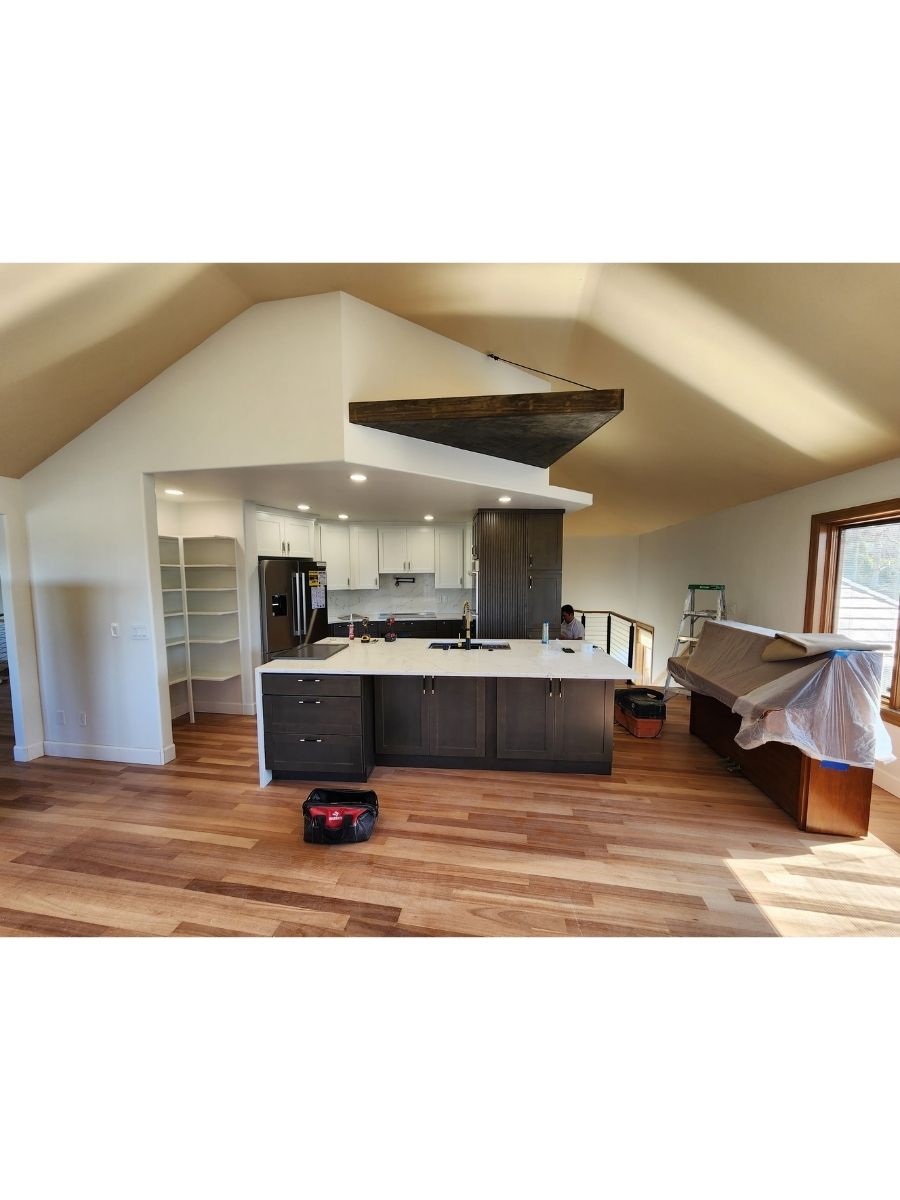
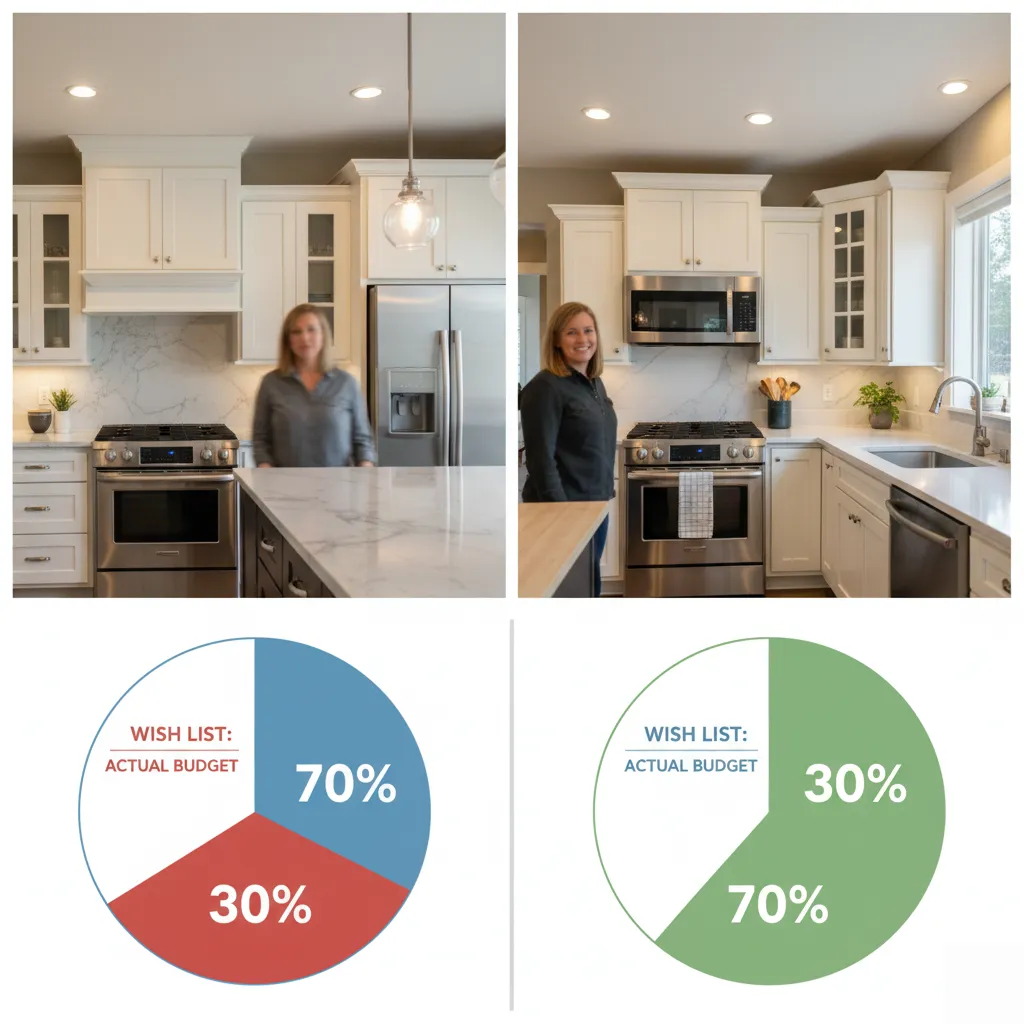
The 30% rule gets passed around a lot. But most guides skip over where it actually came from. It didn’t come from a government agency or a building code — it came from real estate appraisal data. Specifically, it grew out of patterns appraisers and real estate professionals noticed over decades: kitchens that cost more than roughly 30% of the home’s current market value rarely returned that full investment at resale.
That’s the core of it. Spend more than 30% of your home’s value on a kitchen, and you’re likely over-improving for your neighborhood. The house won’t appraise higher just because your cabinets did. We see this play out regularly in Bellevue, where home values vary sharply from one zip code to the next — a kitchen that makes perfect financial sense in one part of town can be a money-losing move six blocks away.
Real estate investors picked this rule up early. Then contractors started using it as a gut-check tool with clients. Over time, it moved from “investor guideline” to “standard remodeling advice.” But here’s what most articles get wrong: the 30% rule was never meant to be a spending target. It’s a ceiling. A warning line. You’re not supposed to aim for it — you’re supposed to stay under it.
Think of it like a speed limit, not a recommended speed.
The rule held up through multiple housing cycles because it’s tied to something real — appraisal methodology. Appraisers use comparable sales to value homes. If no comparable home in your area has sold for the price your renovation would require to break even, the appraisal won’t support it. According to Remodeling Magazine’s Cost vs. Value Report, the average major kitchen remodel recoups roughly 49–67% of its cost at resale, depending on the market and scope. That number is lower than most homeowners expect. And it’s exactly why the 30% ceiling exists — to keep you from spending your way into a gap between what you paid and what the market will pay back.
Last spring, we worked with a homeowner in Bellevue who had already gotten quotes from two other contractors. Both came in well above what the 30% rule would suggest for her home’s current value. She didn’t know that framework existed. Once we walked through the math together, she made a different set of choices — not cheaper, just smarter for her specific situation.
One thing to know: the 30% figure applies to the kitchen alone. It’s not a total renovation budget. If you’re also updating bathrooms or finishing a basement at the same time, each space gets evaluated against its own share of the home’s value. Mixing the numbers together is a common mistake that leads to budget confusion early in the planning process.
The rule also assumes you’re working with a reasonably accurate picture of your home’s current market value — not what you paid for it, not what Zillow shows, but what a licensed appraiser or recent comparable sales would support today. In a market like Bellevue, where values have shifted considerably over the past few years, using an outdated number can throw the whole calculation off before you’ve even picked a cabinet style. Some homeowners also explore energy-efficient upgrades as part of a kitchen remodel — if that applies to you, the IRS guidance on energy efficient home improvement credits is worth reviewing before you finalize your scope.
So the rule is simple. The inputs that feed it are where you have to be careful.
Watch Our Video
See How We Handle What Is the 30% Rule in Kitchen Remodeling and How Does It Affect Your Budget? in Bellevue
How to Calculate the 30% Rule for Your Bellevue Home
The math here is simple. Take your home’s current market value and multiply it by 0.30. That number is your ceiling — the most you should spend on a kitchen remodel before the investment stops making financial sense.
But here’s where most guides get it wrong: they tell you to use your purchase price. Don’t do that. Use your home’s current market value. In Bellevue, that distinction matters more than almost anywhere else in the country. A home bought in 2018 for $900,000 might appraise today at $1.4 million or more, depending on the neighborhood. That gap changes your remodel ceiling by hundreds of thousands of dollars.
Step one is getting an accurate number for what your home is worth right now. You can pull a rough estimate from the King County Assessor’s website. Or ask a local real estate agent for a quick comparative market analysis — most will do it at no charge. We always recommend this before a client commits to a scope of work. Last year, a homeowner in Bellevue’s Somerset neighborhood came to us thinking their home was worth about $1.1 million. The actual market value was closer to $1.35 million. That shifted their remodel ceiling by nearly $75,000.
Once you have your current market value, the calculation looks like this:
Home value: $1,200,000
Multiply by 0.30
30% rule ceiling: $360,000
That $360,000 is not a target. It’s a hard upper limit. Spending beyond it typically means you’re over-improving for your neighborhood — and you won’t recover that investment when you sell. According to Remodeling Magazine’s Cost vs. Value Report, even a major upscale kitchen remodel nationally recoups only around 38–54% of its cost at resale. Going past 30% of your home’s value accelerates that loss.
Now, Bellevue is not a typical market. Median home values here consistently rank among the highest in Washington State. That means your 30% ceiling in Bellevue is almost always higher in raw dollars than it would be in most other cities. A $1.5 million home in Medina or West Bellevue gives you a $450,000 ceiling. That’s real money — and it means you have room to do things right without cutting corners on materials or layout.
But a higher ceiling doesn’t mean you should spend up to it by default. The 30% rule is a guardrail, not a spending plan. We see this constantly: homeowners hear they “can” spend $400,000 on a kitchen and start designing toward that number instead of toward what their household actually needs. Work backward from function, then check your total against the 30% ceiling at the end.
One more thing to factor in: your home’s value changes. If you’re planning a remodel in 2025 and you pulled your market value estimate in 2022, that number is stale. Bellevue’s real estate market has seen meaningful shifts year over year. Recalculate before you finalize any scope of work. A number that’s even 18 months old can throw your planning off by a significant margin.
The calculation itself takes about five minutes. Getting the inputs right — current value, realistic scope, honest cost estimates — is where the real work happens. If you want help running those numbers against an actual project scope, our Bellevue kitchen remodeling page walks through how we approach that process with homeowners from the first conversation.
Now that you know how the 30% rule works — and what it actually protects you from — the next step is applying it to your specific home and project. Our page covers how we help Bellevue homeowners build budgets that make sense for their home’s value and their goals. Ready to run the numbers on your project? Call us at +1-425-696-3311 or schedule a consultation online. You’ve done the research. Let us handle the rest.
Frequently Asked Questions
Common questions about what is the 30% rule in kitchen remodeling and how does it affect your budget? services in Bellevue
What exactly is the 30% rule in kitchen remodeling?
The 30% rule means your kitchen remodel should not cost more than 30% of your home’s current market value. It is a spending ceiling, not a target. If your Bellevue home is worth $800,000, your kitchen budget should stay at or below $240,000. Go past that, and you risk spending more than you will ever recover at resale. Our kitchen remodeling page walks through how to apply this to your specific home and neighborhood.
Does the 30% rule apply to Bellevue homes specifically?
Yes, and Bellevue homeowners need to pay extra attention to it. Home values here have risen sharply over the past decade. That means the gap between what you spend and what you recover can be wider than in slower markets. Some local real estate professionals use a tighter version — closer to 20% to 25% — to stay safe. Knowing your neighborhood’s current comps before you set a budget is a smart first step.
Is the 30% rule a spending target I should try to hit?
No — and this is the most common mistake homeowners make. The 30% rule is a ceiling, not a goal. You are not supposed to spend up to it. You are supposed to use it as a guardrail so you do not over-improve for your neighborhood. A well-planned kitchen that stays well inside the 30% boundary can look just as good as one that pushes past it. The difference is in the decisions, not the dollar amount.
What is over-improvement and why does it matter in Bellevue?
Over-improvement happens when your renovation costs more than the value it adds to your home. In Bellevue, home values shift sharply from one zip code to the next. A kitchen that makes financial sense in one neighborhood can be a money-losing move six blocks away. Real estate appraisers look at comparable sales in your area — not just your kitchen — to set value. The market sets the ceiling, not your personal taste.
When should I call a professional instead of figuring out the 30% rule on my own?
Call a professional before you commit to a scope or sign any contracts. The math looks simple, but applying it correctly to your Bellevue home takes local market knowledge. You need accurate comps from the last six months, within about a half-mile of your home. Get that number wrong and your ceiling is off from the start. A kitchen remodeling professional can walk through the numbers with you and help you make real decisions before any money is spent.
How do I find the right starting number to apply the 30% rule?
Start with your home’s current market value — not what you hope it will be worth after the remodel. Pull recent sales data from comparable homes in your neighborhood. In Bellevue, that means homes sold within the last six months, within roughly a half-mile. Then multiply that number by 0.30 to find your ceiling. Work backward from there to decide what stays in your project and what gets cut. This gives you a real framework instead of guessing.
Call Hunnu Construction
Schedule your free consultation today!
Transform your outdated Bellevue kitchen into the space you've always wanted.
Monday 8 a.m.–6 p.m.
Tuesday 8 a.m.–6 p.m.
Wednesday 8 a.m.–6 p.m.
Thursday 8 a.m.–6 p.m.
Friday 8 a.m.–6 p.m.
Saturday 8 a.m.–6 p.m.
Sunday 10 a.m.–5 p.m.
Links
Terms of Use
Privacy Policy
Cookie Policy
Menu
© 2026. Hunnu Construction LLC. All Rights Reserved.