


Call or Text
What Homeowners Wish They Had Known Before Starting a Kitchen Remodel
What Homeowners Wish They Had Known Before Starting a Kitchen Remodel in Bellevue — Trusted by your neighbors.
Fast, honest service with upfront pricing.

Our team is here to answer your questions and help you get started on turning your vision into reality.
What Homeowners Wish They Knew Before a Kitchen Remodel

You started searching “what homeowners wish they had known before starting a kitchen remodel” because something felt off — maybe a contractor said something that didn’t add up, maybe the estimates came back higher than expected, or maybe you just have that gut feeling that there’s a lot nobody’s telling you. That instinct is right.
The surprises that derail kitchen remodels in Bellevue aren’t random — they’re predictable. And the homeowners who come out of a remodel without regret are almost always the ones who knew what to expect before demolition started.
We’ve worked on enough kitchens in this area to know exactly where things go sideways, and this guide exists to make sure you’re not caught off guard when they do.
What’s Covered on This Page
Kitchen Remodel Timelines Are Almost Always Longer Than Expected
Choosing Materials Early Prevents the Most Frustrating Delays
What do most Bellevue homeowners wish they had budgeted for before starting a kitchen remodel?
How do Bellevue’s permit requirements affect a kitchen remodel timeline?
What is the biggest mistake homeowners make before starting a kitchen remodel?
Should I handle any part of a kitchen remodel myself, or hire a professional for everything?
What temporary costs do homeowners forget to plan for during a kitchen remodel?
Your Budget Needs a Hidden Costs Buffer From Day One
Most homeowners set a budget for their kitchen remodel and feel good about it. Then the walls open up. That’s when the real number shows itself.
According to the National Kitchen and Bath Association, roughly 80% of kitchen remodels run over the original budget. Not because homeowners are bad at math. It’s because the costs that hurt you most are the ones you can’t see until demolition starts.
We pulled drywall on a Bellevue home last spring — a 1960s split-level near Lake Hills — and found galvanized plumbing behind the sink cabinet. The homeowner had no idea. Replacing that line added time and materials that weren’t in anyone’s original plan. It happens more than people expect in homes that age.
The standard advice is to add 10–20% to your budget as a contingency. But here’s what most guides skip: that buffer needs to be liquid and set aside before you sign anything. It can’t be money you’re planning to free up later. Not sitting in an account when demolition starts? It’s not really a buffer.
Where the Hidden Costs Actually Come From
A few categories surprise homeowners every single time. Structural issues are the biggest. Old homes in the Pacific Northwest — especially those built before 1980 — often have subfloor damage from moisture, outdated electrical panels that can’t support modern appliances, or load-bearing walls that weren’t on any drawing. According to HomeAdvisor, electrical upgrades alone can add thousands to a kitchen project when the panel needs expanding.
Permit fees are another one. In Bellevue, kitchen remodels that involve structural, electrical, or plumbing changes require permits through the City of Bellevue Development Services Department. Those fees aren’t always quoted upfront by every contractor, and inspection scheduling can also add days to your timeline. Budget for permits separately. Don’t assume they’re folded into your contractor’s bid unless it’s written down.
Material lead times catch people off guard too. A specific cabinet line or tile gets backordered. You either wait, or you pivot to something in stock that costs more. We’ve seen homeowners spend an extra few thousand dollars just because their first choice had a 14-week lead time and the job couldn’t pause that long.
The Costs That Feel Small But Add Up Fast
Temporary kitchen setup is one nobody budgets for. You’ll be without a functioning kitchen for weeks — sometimes longer. Eating out, buying a mini fridge, setting up a microwave station in the living room. It adds up fast. One family we worked with in Bellevue tracked their food spending during a 6-week remodel and came in nearly $900 over their normal monthly grocery budget..
Storage and disposal fees are real too. Hauling out old cabinets, countertops, and appliances costs money. If you’re renting a dumpster or paying for junk removal, that’s a line item that often gets missed in early planning conversations.
Design changes mid-project — even small ones — carry a cost. Changing a cabinet layout after rough-in work is done means labor gets repeated. Swapping a countertop material after the template is cut means starting over. As homeowners who’ve been through costly renovation mistakes will tell you, the cleanest remodels are the ones where every decision was made before anyone picked up a tool.
Look. The buffer isn’t pessimism. It’s just how remodels work. Set aside 15–20% of your total project estimate before you start, keep it accessible, and treat it as part of the project cost — not extra money you hope you won’t need. The homeowners who do this sleep better at night. The ones who don’t end up making compromises they didn’t want to make. If you’re already feeling uncertain about what your budget should actually cover, it might be worth talking through your numbers with a kitchen remodel professional in Bellevue before you commit to anything.
Kitchen Remodel Timelines Are Almost Always Longer Than Expected
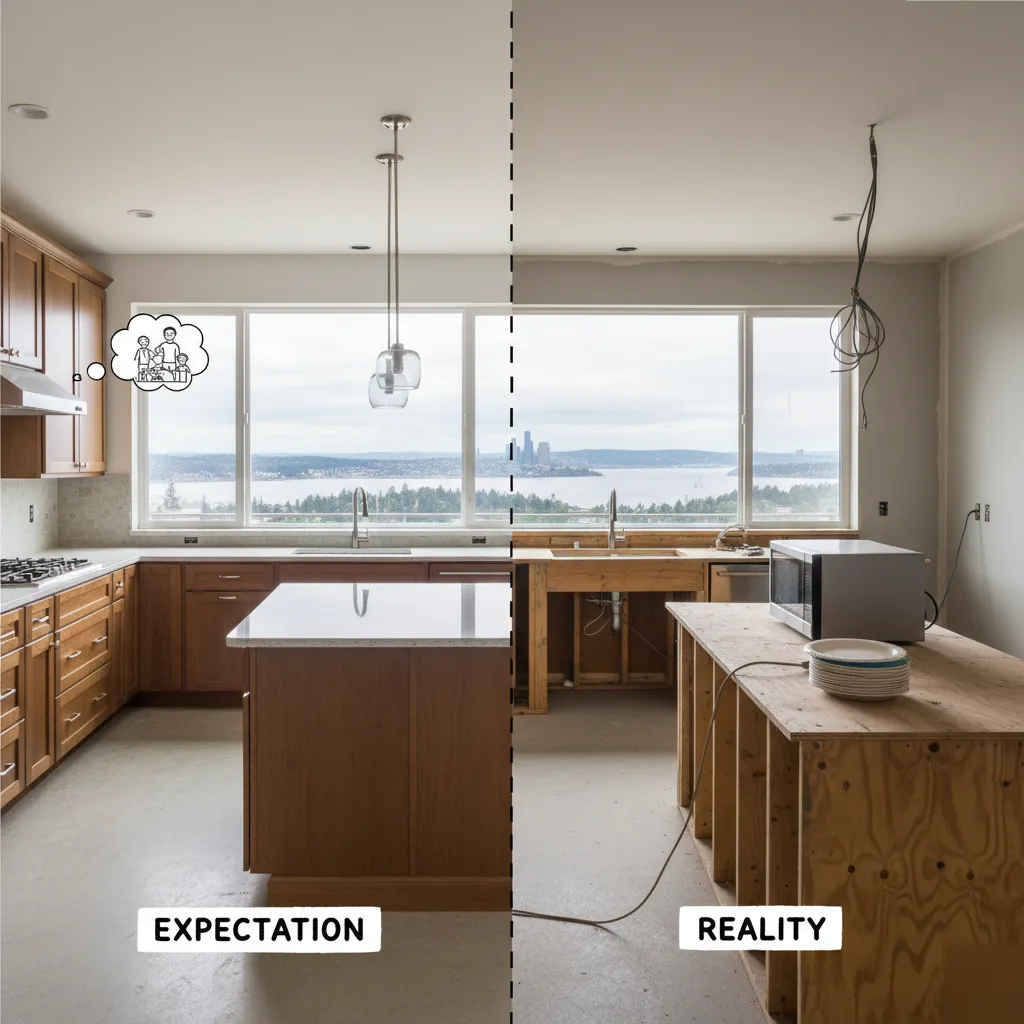
Most homeowners come in thinking their kitchen will be done in four to six weeks. We see this constantly. The real number — for a mid-size kitchen remodel with cabinet replacements, new countertops, and updated plumbing — is closer to three to five months from first demo to final walkthrough. According to the National Kitchen and Bath Association, the average full kitchen remodel takes 6 to 8 weeks of active construction alone, and that doesn’t count design, permitting, or material lead times.
The gap between what people expect and what actually happens comes down to a few things most guides skip right past. Permits are the big one. In Bellevue, pulling a building permit for a kitchen remodel that involves electrical or plumbing work isn’t optional — and the City of Bellevue’s permit review queue can add two to four weeks before a single tool touches your kitchen.
And that’s before materials even arrive.
Cabinet lead times have stretched dramatically since 2020. Semi-custom cabinets from most manufacturers are running eight to twelve weeks out right now. We had a job in Bellevue’s Crossroads neighborhood last spring where the homeowners had already moved their refrigerator into the garage — fully ready to go — and waited eleven weeks for their cabinet order to show up. They hadn’t planned for that. Nobody told them to.
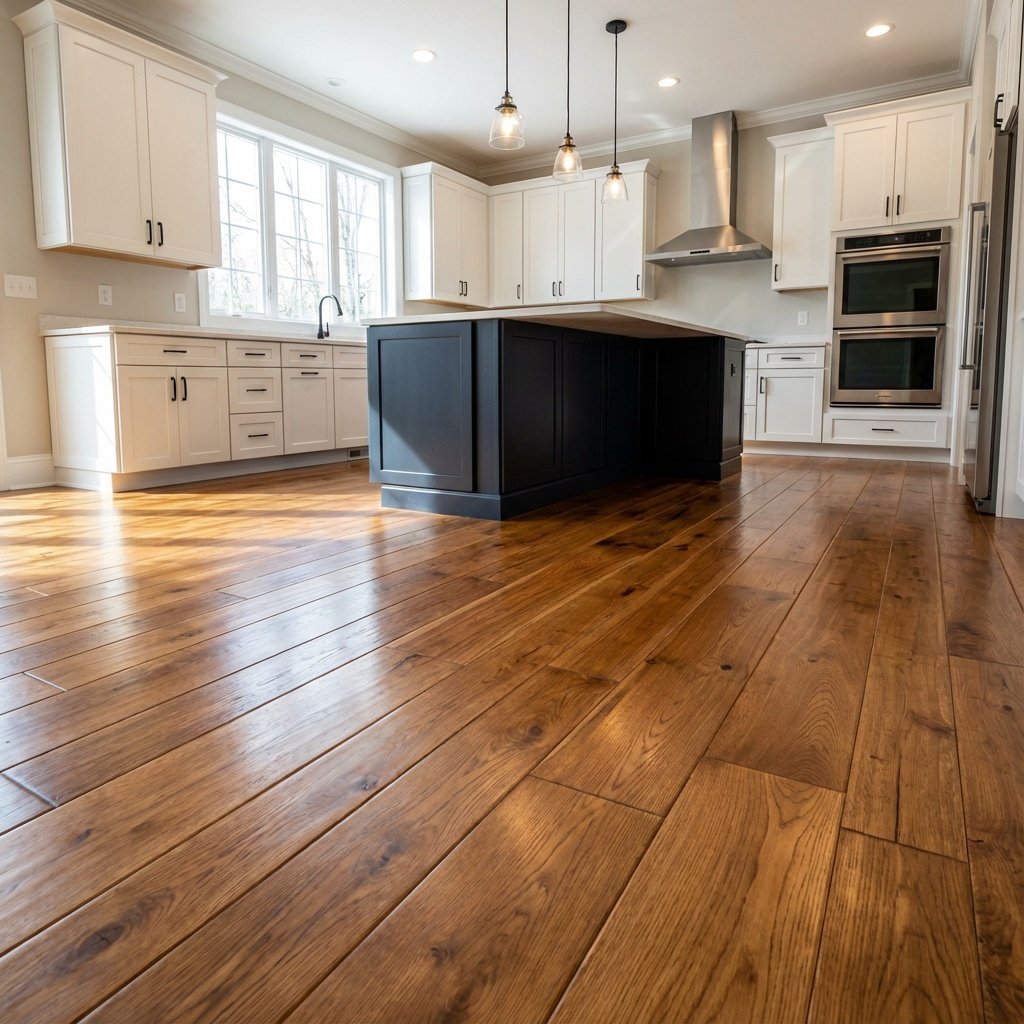
Here’s what the timeline actually looks like when you break it down honestly:
Design and planning: 2–6 weeks
Permit application and review: 2–4 weeks (varies by scope)
Material ordering and lead time: 6–14 weeks depending on cabinet and countertop selections
Demo and rough-in work (plumbing, electrical, framing): 1–2 weeks
Cabinet installation: 2–5 days
Countertop template and fabrication: 1–3 weeks after cabinets are set
Finish work, appliance installation, punch list: 1–2 weeks
Add those up. You’re looking at four to six months for a project that felt like it should take six weeks. That’s not a scare tactic. That’s just what the math looks like when you write it all out.
Most guides get this wrong by showing you the construction phase only. They’ll say “installation takes two weeks” — and they’re not lying, but they’re leaving out everything that has to happen before the first cabinet goes up. The planning phase and the waiting phase are where most of the time goes. Start your project in October hoping for a finished kitchen by the holidays? You’ve probably already missed that window.
One thing that genuinely helps: order your materials before demo day. We’ve seen homeowners start demo thinking they’d get cabinets in three weeks, then live without a kitchen for three months because the order got delayed. Staggering the timeline so materials are staged and ready before demolition starts can cut weeks off your project and save you a lot of meals eaten standing over a bathroom sink.
Weather matters more than people think, too. Bellevue winters are wet. If your project involves any exterior work — a window addition, a vent cutout, a new gas line run — wet conditions can push trades back by days or more. Plan for it.
The homeowners who handle remodels best are the ones who build buffer time in from day one. Give yourself a timeline that’s two to three weeks longer than your contractor quotes. Not because your contractor is wrong, but because something always comes up — a backordered faucet, a surprise subfloor issue, an inspector who needs a revisit. Buffer time isn’t pessimism. It’s just how remodels work.
Choosing Materials Early Prevents the Most Frustrating Delays

Here’s the thing most homeowners don’t find out until it’s too late: cabinets, countertops, and tile are not sitting in a warehouse waiting for you. Lead times are real. They’ll stall your entire project if you’re not ready. We’ve seen kitchens in Bellevue sit half-demo’d for six to eight weeks because a countertop slab was backordered. That’s not a contractor problem. That’s a materials timing problem.
Custom cabinets alone can take eight to twelve weeks from order to delivery. Semi-custom runs four to six weeks in most cases. If you wait until permits are approved to start shopping, you’ve already lost a month or more. The smartest move you can make is to select your materials before the project officially starts — not during it.
Most guides tell you to “have a vision” before you begin. That’s not specific enough. What you actually need is confirmed selections with order numbers in hand. There’s a difference between liking a quartz slab you saw online and having it reserved at a local stone yard. One of those keeps your project moving. The other leaves your contractor waiting.
The Categories That Cause the Longest Waits
Not all materials are equal when it comes to lead times. Some things — like basic in-stock tile — you can grab next week. Others will test your patience in ways you didn’t expect. Here’s where we see the biggest holdups on jobs in the Bellevue area:
Custom cabinetry: 8–12 weeks minimum from order confirmation
Specialty countertop slabs: Quartzite and natural stone can run 4–8 weeks depending on the supplier and season
Appliances: Specific models — especially panel-ready refrigerators or professional-grade ranges — often have 6–16 week lead times
Custom hardware and fixtures: Imported pulls, specialty faucets, and unlacquered brass finishes can take 4–10 weeks
Windows and skylights: If your remodel includes adding natural light, custom sizing adds weeks to the schedule
We pulled a job last spring where the homeowner had every surface selected — except the range hood. A custom-width insert. It needed to be ordered from a specialty supplier, and that single item pushed the project completion back by three weeks. The kitchen was otherwise done. The range hood sat on a truck somewhere.
How Appliance Sizing Affects Everything Else
This is the one most people get wrong. Your appliance dimensions have to be locked in before your cabinet drawings are finalized. A refrigerator that’s one inch wider than the spec your designer used will require new cabinet panels, a modified opening, and potentially a redrawn layout. That’s not a small fix. Appliance specs drive cabinet specs. Cabinet specs drive countertop templates. It all flows in one direction — and it starts with the appliances.
In Bellevue, where many homes have older kitchens being opened up to larger footprints, we regularly see homeowners fall in love with an oversized range only to find the existing gas line location makes it impractical. Knowing your appliance selections early gives your contractor time to plan rough-in work before walls close up. Having guided hundreds of Bellevue kitchen projects through exactly these decisions, we’ve learned that the homeowners who finalize appliance specs first almost always have smoother builds.
And if you’re working with a designer, give them your appliance model numbers — not just the brand or the general size. The model number is what the drawings are built around. A “36-inch range” from two different manufacturers can vary by a full inch in actual depth or height, and that matters when you’re fitting it under a custom hood with a specific clearance requirement.
The earlier you lock in your materials, the more control you have over your timeline. That’s not something a contractor can do for you. It’s a decision that has to come from you — ideally before the first wall comes down. If you’re ready to start making those decisions with someone who knows what to watch for, a kitchen remodeling consultation in Bellevue is a good place to begin.
Frequently Asked Questions
Common questions about what homeowners wish they had known before starting a kitchen remodel services in Bellevue
What do most Bellevue homeowners wish they had budgeted for before starting a kitchen remodel?
Most homeowners wish they had set aside a separate contingency fund before signing anything. Hidden costs — like outdated plumbing, subfloor damage, or permit fees — show up after demolition starts. In Bellevue, older homes near neighborhoods like Lake Hills often have galvanized pipes or outdated electrical panels that weren’t visible upfront. A 15–20% buffer on top of your total estimate is the standard recommendation. Keep it liquid and accessible from day one.
How do Bellevue’s permit requirements affect a kitchen remodel timeline?
Bellevue’s permit process can add two to four weeks to your timeline before any work begins. The City of Bellevue Development Services Department requires permits for remodels involving structural, electrical, or plumbing changes. Not every contractor mentions this upfront. Always confirm in writing whether permit fees are included in your bid. Skipping permits isn’t an option — and assuming they’re covered when they’re not will cost you time and money.
What is the biggest mistake homeowners make before starting a kitchen remodel?
The biggest mistake is making design decisions after work has already started. Changing a cabinet layout after rough-in work is done means labor gets repeated. Swapping countertop materials after a template is cut means starting over. Every decision — layout, materials, appliances — should be locked in before anyone picks up a tool. The cleanest remodels happen when the planning is finished before demolition begins. Our full kitchen remodel guide covers how to prepare for each phase.
How long does a kitchen remodel actually take in Bellevue?
A mid-size kitchen remodel in Bellevue typically takes three to five months from first demo to final walkthrough. That includes design time, permit review, material lead times, and active construction. The National Kitchen and Bath Association estimates six to eight weeks of active construction alone. Semi-custom cabinet lead times can stretch beyond that. If a contractor quotes you four to six weeks total, ask them to walk through every phase in writing.
Should I handle any part of a kitchen remodel myself, or hire a professional for everything?
Some tasks — like painting or removing hardware — are fine to handle yourself. But anything involving electrical, plumbing, or structural changes in Bellevue requires licensed work and permits. Trying to DIY those areas can fail inspection and cost more to fix than hiring a professional from the start. If you’re unsure where the line is, talk to a local kitchen remodel professional before you start pulling things apart.
What temporary costs do homeowners forget to plan for during a kitchen remodel?
Temporary living costs are almost always forgotten. You’ll be without a working kitchen for weeks — sometimes longer. Eating out, buying a mini fridge, and setting up a microwave station adds up fast. One Bellevue family tracked nearly $900 in extra food spending over a six-week remodel [SOURCE TBD: client scenario, internal records]. Add storage fees, junk removal, and dumpster rental to that list. Budget for these separately so they don’t eat into your contingency fund.
Call Hunnu Construction
Schedule your free consultation today!
Transform your outdated Bellevue kitchen into the space you've always wanted.
Monday 8 a.m.–6 p.m.
Tuesday 8 a.m.–6 p.m.
Wednesday 8 a.m.–6 p.m.
Thursday 8 a.m.–6 p.m.
Friday 8 a.m.–6 p.m.
Saturday 8 a.m.–6 p.m.
Sunday 10 a.m.–5 p.m.
Links
Terms of Use
Privacy Policy
Cookie Policy
Menu
© 2026. Hunnu Construction LLC. All Rights Reserved.