


Call or Text
The Dos and Don’ts of Remodeling a Kitchen Every Homeowner Should Know
The Dos and Don’ts of Remodeling a Kitchen Every Homeowner Should Know in Bellevue — Trusted by your neighbors.
Fast, honest service with upfront pricing.

Our team is here to answer your questions and help you get started on turning your vision into reality.
Kitchen Remodel Dos and Don’ts Every Homeowner Should Know

You’ve been staring at your kitchen long enough to know something has to change — the layout doesn’t work, the cabinets are dated, and every time you cook a real meal it feels like a battle against the space itself. But before you start pulling up Pinterest boards and calling contractors, there’s a lot you need to know to keep this project from becoming a costly, stressful mess.
The Dos and Don’ts of Remodeling a Kitchen Every Homeowner Should Know is exactly what this guide covers — from the planning decisions that make or break a timeline to the permit requirements Bellevue homeowners get caught off guard by every single year.
Having worked on kitchens across this area for years, we know where projects go sideways and why. By the time you finish reading, you’ll understand the process well enough to ask the right questions — and recognize a contractor who actually knows what they’re doing.
What’s Covered on This Page
Planning Your Kitchen Remodel the Right Way Sets the Whole Project Up for Success
The Biggest Kitchen Remodeling Mistakes Homeowners Make and How to Avoid Them
Smart Dos That Make a Kitchen Remodel Go Smoother and Last Longer
What is the biggest mistake homeowners make when remodeling a kitchen?
Should I hire a professional or handle parts of my kitchen remodel myself?
What should I do to prepare for living without a kitchen during a remodel?
Does an older Bellevue home affect how a kitchen remodel is planned?
Planning Your Kitchen Remodel the Right Way Sets the Whole Project Up for Success
The dos and don’ts of remodeling a kitchen every homeowner should know start here — before a single cabinet comes off the wall. Planning is where most projects either get set up to run smoothly or quietly start falling apart. And the gap between those two outcomes? Almost always visible in the planning phase, not the construction phase.
Most guides tell you to “make a list of what you want.” That’s not enough. What we see constantly in Bellevue is homeowners who have a vision but no sequence. They know they want new cabinets, better lighting, and an island — but they haven’t thought through how those three things interact structurally, electrically, or logistically. That mismatch creates delays, change orders, and budget overruns that could have been avoided.
Start with function, not aesthetics. Before you pick a cabinet finish or countertop material, map out how you actually use your kitchen. Where do you prep food? Where do groceries land when you walk in? Where do people naturally stand and talk while you cook? These patterns should drive your layout decisions. The National Kitchen and Bath Association says the work triangle — the path between your sink, stove, and refrigerator — should total no more than 26 feet for efficient workflow.
Once you understand the function, get your measurements right. We pulled permits on a full gut remodel in Bellevue last spring where the homeowner had already ordered custom cabinetry based on rough measurements. Two upper cabinets didn’t clear the soffit. That’s an expensive lesson. Measure twice, then have someone else measure again. If you’re working with a contractor, make sure they verify dimensions independently before anything is ordered.
Permits matter more than most people expect. In Bellevue, kitchen remodels that involve moving plumbing, adding electrical circuits, or altering load-bearing walls require permits through the City of Bellevue’s Development Services department. Skipping permits doesn’t just create legal risk — it creates problems when you sell. Buyers’ inspectors look for unpermitted work. It shows up. Plan for the permit timeline from the start, because it affects when your contractor can begin certain phases. Understanding how permit modifications are documented and approved can help you ask better questions when working with your local development office.
Build a realistic project timeline before you commit to any start date. A kitchen remodel typically takes six to twelve weeks once work begins, depending on scope. But material lead times can push that out considerably. Custom cabinets alone can run eight to twelve weeks from order to delivery. If you’re planning around a specific date — a holiday, a family event — work backward from that date and account for every lead time in the chain.
One thing most planning guides skip entirely: your temporary kitchen setup. You will not have a functional kitchen for weeks. Where will you wash dishes? Where will you store food? We’ve seen families try to wing it and end up eating out every meal for a month, which adds real strain to the project. Plan your temporary setup the same way you’d plan the remodel itself. A folding table, a microwave, a hot plate, and a cooler can carry you through — if you think it through in advance.
And don’t lock in every decision before the demo. Leave flexibility in your plan for what gets discovered once walls open up. Older homes in Bellevue — especially those built in the 1960s and 70s — regularly reveal outdated wiring, galvanized plumbing, or insulation that needs to be addressed. A plan with no room to adapt will break under the pressure of those discoveries. Build in a contingency buffer, both in time and in budget, so surprises don’t stop the project cold. If you’re already seeing these warning signs in your own kitchen, it may be worth talking through your options with a kitchen remodeling professional in Bellevue before you commit to a plan.
The Biggest Kitchen Remodeling Mistakes Homeowners Make and How to Avoid Them
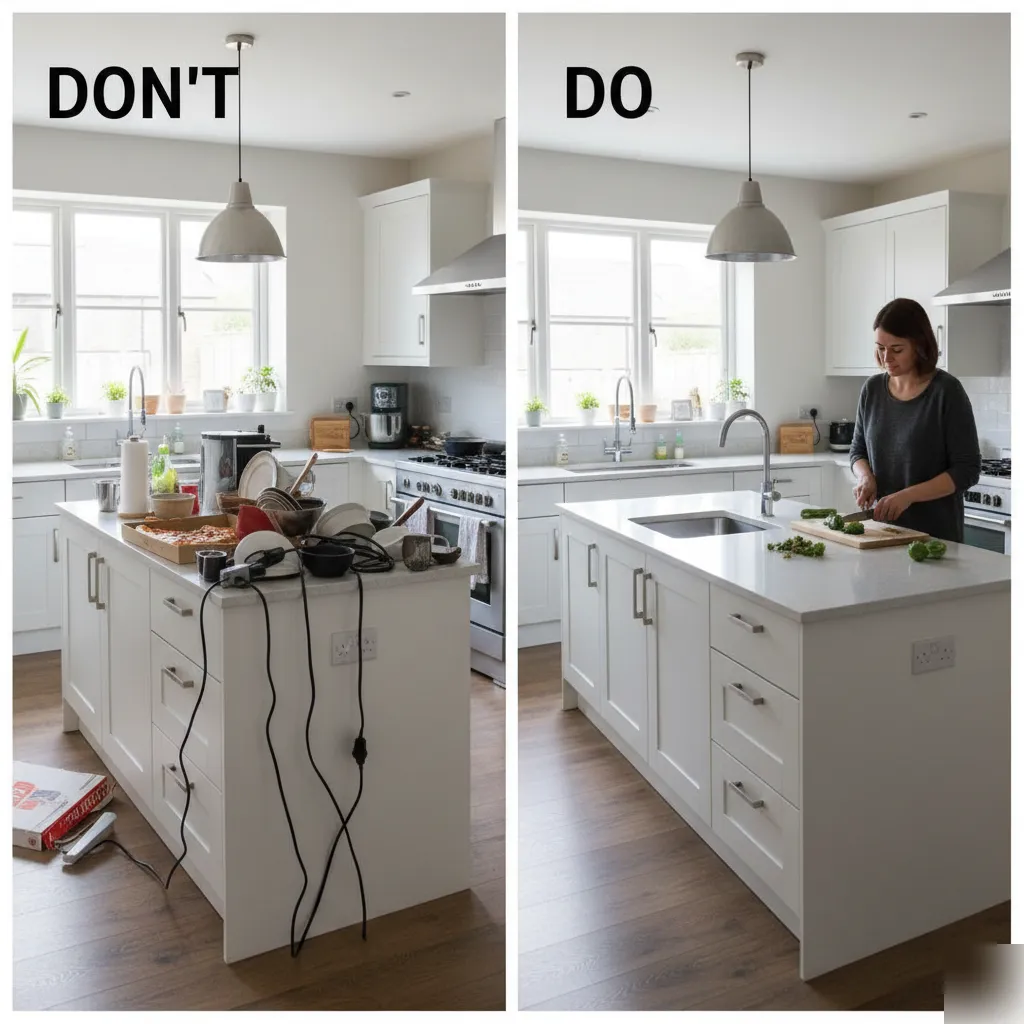
Most kitchen remodels don’t go wrong because of bad taste. They go wrong because of decisions made in the first two weeks — before a single cabinet is ordered or a wall is touched. We see this constantly in Bellevue, especially in older homes where the existing layout looks fine on paper but hides a lot of surprises behind the drywall.
The single biggest mistake? Skipping a proper site assessment before finalizing the design. Homeowners fall in love with a layout they saw online, commit to it, and then discover their plumbing stack is in exactly the wrong place to make it work. Moving a sink even a few feet can mean rerouting drain lines, which adds time, cost, and stress to a project that was already stretched thin. The National Kitchen and Bath Association lists plumbing relocation as one of the top three budget-busters in kitchen remodels.
Most guides will tell you to “plan ahead.” Not wrong — but it misses the real issue. The problem isn’t that homeowners don’t plan. It’s that they plan around the design instead of planning around the structure. Get a contractor into the space before you pick your countertops. Not after.
Another mistake we see regularly: underestimating how long the project will take and not planning around it. A kitchen remodel in the Bellevue area typically runs four to eight weeks for a mid-size project, depending on permit timelines and material lead times. We had a job last spring where the homeowner scheduled a family gathering six weeks out, assuming the kitchen would be done. The cabinets were back-ordered. The gathering happened. The kitchen wasn’t finished. Plan your timeline with buffer built in — not a best-case scenario.
Ventilation is the one area where we see homeowners cut corners the most, and it causes the most long-term damage. A range hood that isn’t properly vented to the outside doesn’t just fail to remove smoke — it pushes grease and moisture into your cabinets and walls. Over time, that moisture leads to mold and wood damage. The IRC (International Residential Code) sets minimum ventilation requirements for kitchens, and many jurisdictions including Washington State enforce these at inspection [SOURCE TBD: IRC Section M1503 or Washington State Building Code].
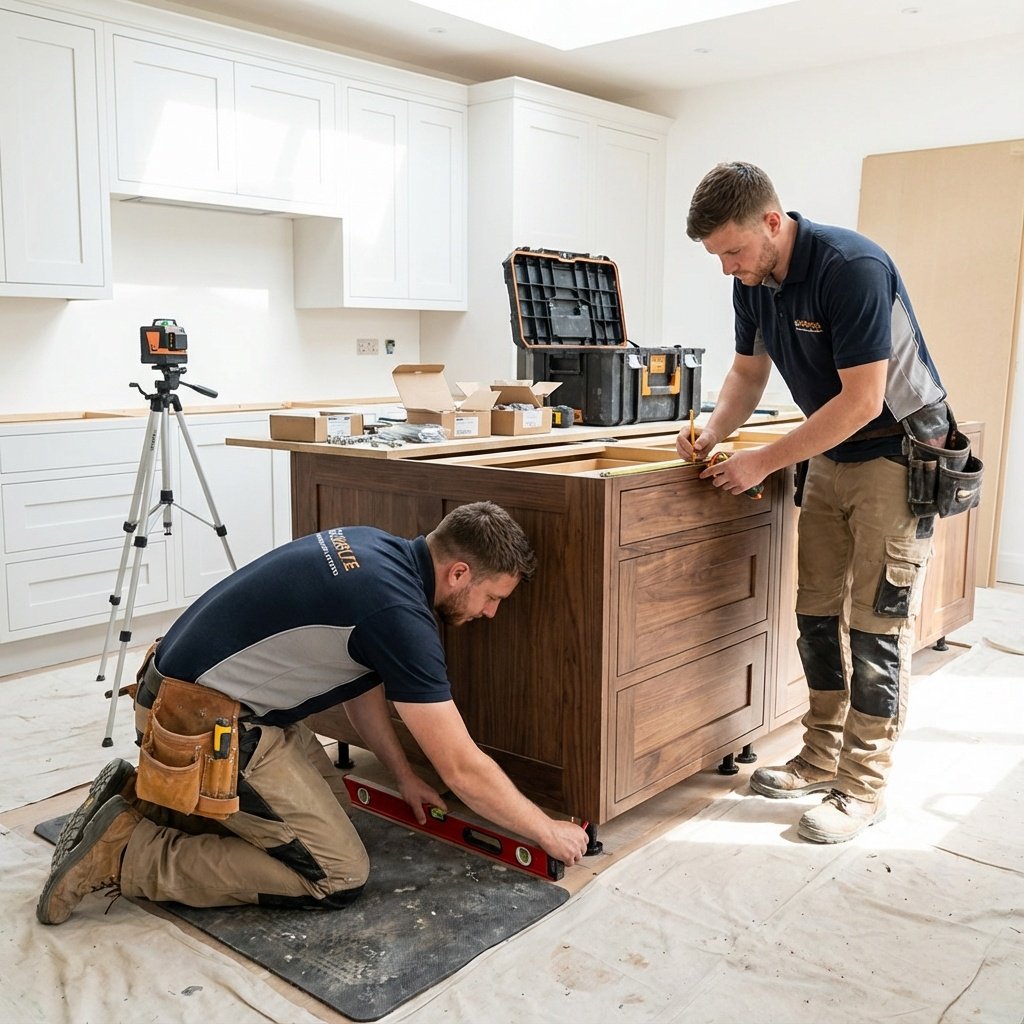
Here’s the thing — the ventilation mistake is one most people don’t even know they’re making until the inspection fails or they start noticing grease buildup in places it shouldn’t be. If your contractor isn’t talking to you about CFM ratings and duct routing early in the process, ask them directly.
Electrical is the other silent problem area. Older Bellevue homes — especially anything built before 1980 — often have kitchens wired for far fewer appliances than a modern kitchen demands. Adding a dishwasher, a microwave, and a double oven to a panel that wasn’t designed for that load is a fire risk, not just an inconvenience. The NEC (National Electrical Code) requires dedicated circuits for major kitchen appliances, and this gets flagged at inspection regularly.
One thing most remodeling guides get wrong: they treat permits as a bureaucratic hassle rather than a protection. Pulling permits for electrical, plumbing, and structural work in Bellevue means a licensed inspector reviews the work before walls close up. That inspection is the last line of defense between a safe kitchen and a problem that stays hidden for years. Skipping permits to save time almost always costs more in the end — especially at resale, when buyers ask for documentation.
The dos and don’ts of remodeling a kitchen every homeowner should know start here: know what’s behind your walls, plan your timeline honestly, and don’t treat permits as optional. Everything else is details.
Smart Dos That Make a Kitchen Remodel Go Smoother and Last Longer
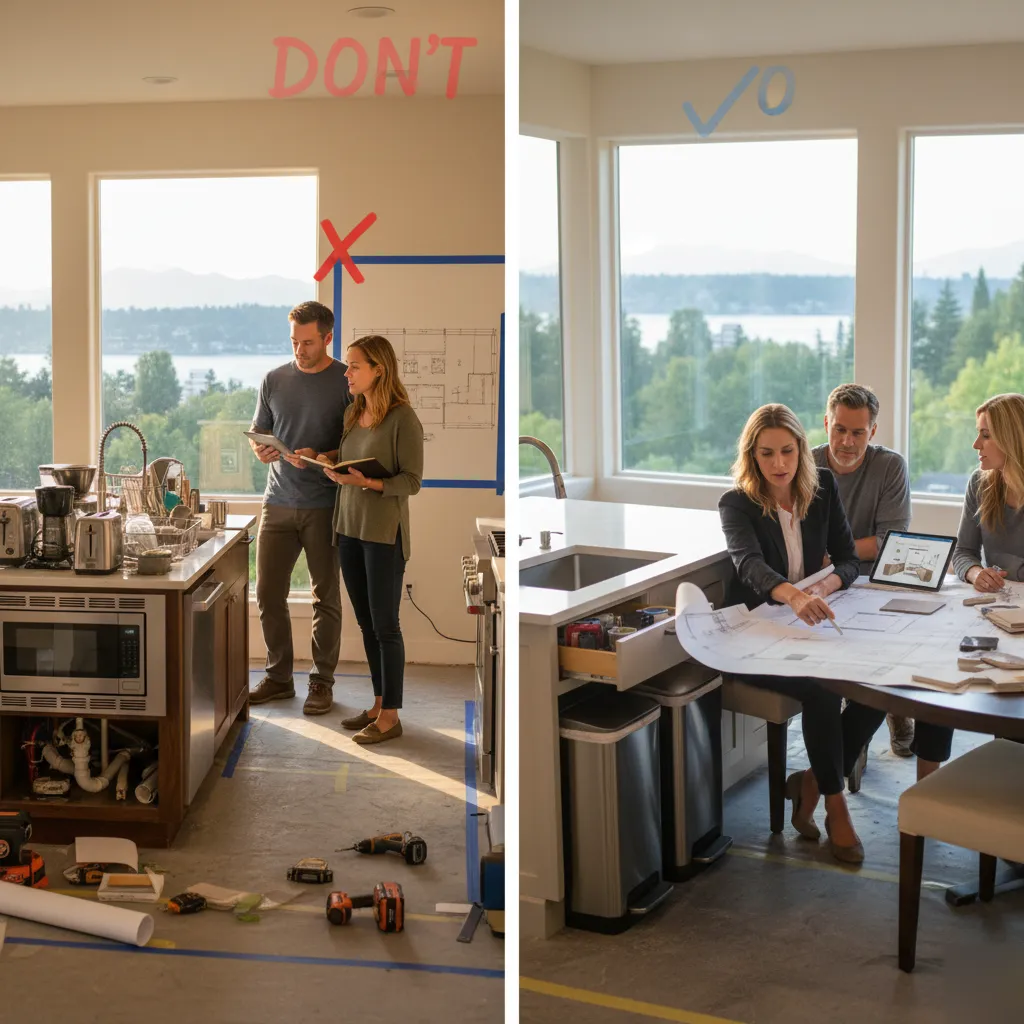
The dos and don’ts of remodeling a kitchen every homeowner should know start with one simple truth: the jobs that go well aren’t lucky. They’re planned. We’ve worked on kitchens all over Bellevue — older homes in Beaux Arts Village, newer builds in Eastgate — and the difference between a smooth remodel and a painful one usually comes down to decisions made before anyone picks up a tool.
Start with a real budget range, not a wish number. The National Kitchen and Bath Association found that most homeowners underestimate their final kitchen remodel cost by 15 to 20 percent. That gap comes from surprises behind the walls — old wiring, water damage, subfloor rot. Build a contingency into your plan. Ten percent is the floor. Fifteen is smarter.
Firsthand note: Last spring we opened up a wall in a 1970s Bellevue split-level and found aluminum wiring that had to be addressed before anything else could move forward. The homeowner had no idea it was there — and it’s exactly the kind of thing a thorough site assessment catches before it derails a timeline.
Work the triangle. The kitchen work triangle — the path between your sink, stove, and refrigerator — has been a layout standard for decades. Most guides mention it and move on. But here’s what they skip: the triangle breaks down fast when an island gets added without accounting for traffic flow. If two people cook at the same time in your house, that matters more than how the triangle looks on paper. Think about how you actually use the space.
Pull the permits. This is the one most people want to skip, and it’s the one that causes the most problems later. In Bellevue, permits are required for structural changes, electrical work, and plumbing modifications [Source: City of Bellevue Development Services, https://bellevuewa.gov/city-government/departments/development-services]. Skipping them doesn’t just risk a fine — it can complicate your home sale years down the road when an inspector flags unpermitted work. We see this constantly. Homeowners who saved a few weeks upfront and paid for it when they tried to sell.
Hire trades in the right order. Rough work — demo, framing, electrical, plumbing — happens before cabinets go in. Cabinets go in before countertops are templated. Countertops get templated before a backsplash is tiled. Get this sequence wrong and you’re paying people to redo work. It sounds obvious until you’re three weeks in and your countertop installer is waiting on a cabinet door that was hung crooked.
Firsthand note: We once had a client in Sammamish who ordered countertops templated before the cabinet installation was fully settled. The template was off by a quarter inch on one run. Small number, real problem.
Choose materials based on how you live, not just how things look. Honed marble is beautiful. It also stains easily if you cook with oil and forget to seal it. Quartz holds up better in a working kitchen. If you have kids, heavy foot traffic, or you actually cook — not just reheat — factor that into every surface decision. Houzz’s 2023 U.S. Houzz Kitchen Trends Study found that 47 percent of homeowners said durability was their top priority when selecting countertop materials [Source: Houzz Research, https://www.houzz.com/research].
Don’t underestimate lighting. Most kitchens are under-lit because the original builder put in one ceiling fixture and called it done. Layered lighting — task lighting under cabinets, ambient overhead, accent lighting in glass-front cabinets — changes how a kitchen feels and functions. It’s one of the highest-return upgrades you can make relative to cost.
Plan your storage before you finalize your cabinet layout. Think about what you own. Deep drawers for pots. Pull-outs for corner cabinets. A dedicated spot for trash and recycling. Kitchens that feel disorganized six months after a remodel usually had storage decided last, as an afterthought. If you’re ready to move from planning to execution, our team has guided Bellevue homeowners through kitchen remodeling projects of every size and scope — and we know exactly how to keep yours on time, on budget, and built to last.
Now that you know what to look for — and what to avoid — let us handle the hard part. Our team has guided Bellevue homeowners through projects of every size and scope, and we know exactly how to keep yours on time, on budget, and built to last. Call us at +14256963311 or schedule a consultation online to get started.
Frequently Asked Questions
Common questions about the dos and don’ts of remodeling a kitchen every homeowner should know services in Bellevue
Do Bellevue homeowners need permits for a kitchen remodel?
Yes, most kitchen remodels in Bellevue require permits if you’re moving plumbing, adding electrical circuits, or touching load-bearing walls. Permits are handled through the City of Bellevue’s Development Services department. Skipping this step creates real problems when you sell your home — inspectors find unpermitted work. Build the permit timeline into your project from day one. It affects when your contractor can legally start certain phases of the job.
What is the biggest mistake homeowners make when remodeling a kitchen?
The biggest mistake is locking in a design before doing a proper site assessment. Many homeowners fall in love with a layout online, commit to it, and then discover their plumbing stack is in the wrong place. Moving a sink even a few feet can mean rerouting drain lines. That adds time and cost fast. Always have your contractor verify the existing conditions before any design is finalized or materials are ordered.
How long does a kitchen remodel typically take in Bellevue?
Most kitchen remodels take six to twelve weeks once work begins, depending on the scope. But material lead times can push that out. Custom cabinets alone can take eight to twelve weeks from order to delivery. Older Bellevue homes — especially those built in the 1960s and 70s — can add time when outdated wiring or galvanized plumbing is found behind walls. Always build a contingency buffer into your timeline.
Should I hire a professional or handle parts of my kitchen remodel myself?
Hire a professional for anything involving permits, plumbing, or electrical work. These are areas where mistakes are costly and sometimes dangerous. You can handle smaller tasks like painting or hardware swaps on your own. But if your project involves moving a wall, adding a circuit, or relocating a sink, a licensed contractor is the right call.
What should I do to prepare for living without a kitchen during a remodel?
Set up a temporary kitchen before demo day — not after. A folding table, microwave, hot plate, and a cooler can carry your household through several weeks. Think through where you’ll wash dishes and store food. Families who skip this step often end up eating out every meal, which adds real financial and mental strain to an already stressful project. A little planning here goes a long way toward keeping your household running smoothly.
Does an older Bellevue home affect how a kitchen remodel is planned?
Yes, older Bellevue homes — especially those built in the 1960s and 70s — regularly hide surprises behind the walls. Outdated wiring, galvanized plumbing, and insulation that needs replacing are all common finds once demo begins. These discoveries are normal, but they can stall a project if your plan has no flexibility. Build a contingency buffer into both your timeline and your budget. A rigid plan breaks under the pressure of what older homes reveal.
Call Hunnu Construction
Schedule your free consultation today!
Transform your outdated Bellevue kitchen into the space you've always wanted.
Monday 8 a.m.–6 p.m.
Tuesday 8 a.m.–6 p.m.
Wednesday 8 a.m.–6 p.m.
Thursday 8 a.m.–6 p.m.
Friday 8 a.m.–6 p.m.
Saturday 8 a.m.–6 p.m.
Sunday 10 a.m.–5 p.m.
Links
Terms of Use
Privacy Policy
Cookie Policy
Menu
© 2026. Hunnu Construction LLC. All Rights Reserved.