


Call or Text
How to Hire a General Contractor for a Kitchen Remodel: Expert Advice and Red Flags to Avoid
How to Hire a General Contractor for a Kitchen Remodel: Expert Advice and Red Flags to Avoid in Bellevue — Trusted by your neighbors.
Fast, honest service with upfront pricing.

Our team is here to answer your questions and help you get started on turning your vision into reality.
How to Hire a General Contractor for a Kitchen Remodel: Expert Advice and Red Flags to Avoid

You’ve started getting quotes, maybe watched a few YouTube videos, and now you’re realizing this decision is more complicated than you thought. Hiring the wrong contractor for a kitchen remodel doesn’t just cost money — it costs months.
That’s why understanding How to Hire a General Contractor for a Kitchen Remodel: Expert Advice and Red Flags to Avoid matters before you sign anything.
At our company, we’ve managed enough Bellevue kitchen remodels to know exactly where projects go wrong — and it almost always starts with the hire. What follows is the kind of honest, field-tested guidance we give homeowners before they make one of the biggest investments in their home.
Read it carefully. The contractor who gets your job should be able to answer every question in here without hesitating.
What’s Covered on This Page
What a General Contractor Actually Does During a Kitchen Remodel
The Right Questions to Ask Before You Hire a Kitchen Remodel Contractor
Red Flags That Signal You Should Walk Away From a Contractor
How do I know if a general contractor is licensed to work in Bellevue?
What is the biggest mistake homeowners make when hiring a kitchen remodel contractor?
When should I hire a general contractor instead of managing trades myself?
What red flags should I watch for during a contractor walkthrough?
What a General Contractor Actually Does During a Kitchen Remodel
Most homeowners think a general contractor just swings a hammer and collects a check. Not even close. When you’re figuring out how to hire a general contractor for a kitchen remodel: expert advice and red flags to avoid, the first thing to get straight is what you’re actually paying for.
A GC is a project manager first. They coordinate every trade — plumbers, electricians, tile setters, cabinet installers — so those people show up in the right order and don’t undo each other’s work. That sequencing matters more than most people realize. If the cabinet installer shows up before the electrician rough-ins are done, you’re paying for someone to stand around. Or worse, you’re ripping out finished work.
We see this constantly on jobs here in Bellevue. A homeowner hires trades separately to save money, and the project turns into a six-month headache because nobody owns the schedule. That’s the GC’s job. Own the schedule.
Here’s what the work actually looks like, broken into phases:
Pre-construction: Pulling permits, reviewing plans, ordering materials, and confirming lead times on cabinets and appliances
Demo: Removing existing cabinets, flooring, and sometimes walls — with attention to what’s load-bearing and what’s not
Rough-in work: Plumbing and electrical moved or added before walls close up
Inspections: Scheduling city inspections at the right milestones so work doesn’t get buried before it’s approved
Finish work: Cabinets, counters, tile, fixtures, and final trim
Punch list: Walking the job with you to catch anything that needs correction before final payment
The permit piece is where a lot of DIY-managed projects fall apart. In Washington State, kitchen remodels that involve moving plumbing or electrical require permits through the local building department. Bellevue has its own permitting process through the City of Bellevue Development Services. A licensed GC handles that paperwork and knows which inspections are required at which stages. Skip this, and you can face serious problems when you sell the home — or worse, during a home inspection.
One thing most guides get wrong: they treat the GC’s coordination role as a soft skill. It’s not. It’s the technical skill. Knowing that your countertop template can’t be measured until cabinets are set, and cabinets can’t be set until the floor is done, and the floor can’t go in until the subfloor is leveled — that chain of dependencies is what a good GC carries in their head. A bad one learns it by making expensive mistakes on your job.
Last spring we were on a kitchen job in the Factoria area where the original plumbing stack was cast iron from the 1970s. The homeowner had no idea. A GC who’s done enough kitchens in older Bellevue-area homes knows to look for that before demo, not after. That kind of field knowledge changes what gets budgeted and what gets scheduled.
According to the National Association of Home Builders, kitchen remodels are consistently among the most complex residential projects because they involve every major trade simultaneously. That complexity is exactly why the GC role exists.
The short version: a GC protects your project from the chaos of moving parts. Not a luxury on a kitchen remodel. They’re the reason the job finishes on time and passes inspection. If you’re still weighing your options, the How to Hire a General Contractor for a Kitchen Remodel page walks through what to look for in a qualified Bellevue contractor before you commit.
The Right Questions to Ask Before You Hire a Kitchen Remodel Contractor

Most homeowners go into contractor interviews with a short list. How much will it cost? How long will it take? Those two questions are fine — but they’re not the ones that actually protect you. The questions that matter are the ones most guides skip entirely.
Start here: “Who will be on my job site every day?” This one question tells you more than almost anything else. A general contractor might sell you on their experience, then hand your project to a subcontractor you’ve never met. We’ve seen this happen on jobs in Bellevue where the GC showed up for the walkthrough and disappeared for three weeks. Ask specifically who manages day-to-day work and whether you’ll have a dedicated site supervisor.
Ask how many active projects they’re running at the same time. There’s no magic number. But a contractor juggling six or seven jobs simultaneously may not have the bandwidth to keep yours on schedule. A good contractor will be honest about this. A contractor who gets defensive is telling you something.
“Can I speak with a past client whose project looked like mine?” Not a reference they hand you — ask them to connect you with someone whose kitchen had a similar scope. A full gut-and-rebuild in an older Bellevue home is very different from a cabinet refresh in a newer build. You want to talk to someone who went through what you’re about to go through.
Firsthand note: We had a client on a 1960s split-level in the Eastgate area who skipped this step. The contractor had glowing reviews — but all for smaller jobs. The structural surprises in her kitchen were completely outside his normal scope, and it showed. Having managed similar projects across the Eastside for years, we’ve learned that scope-matched references aren’t a courtesy — they’re a necessity.
Ask about their subcontractor relationships. Do they use the same electricians and plumbers consistently, or do they pick whoever’s available? Contractors who work with the same subs repeatedly tend to run tighter timelines — the subs know how the GC operates, there’s less friction, and that matters when your kitchen is torn apart and you’re eating takeout for the fourth week in a row.
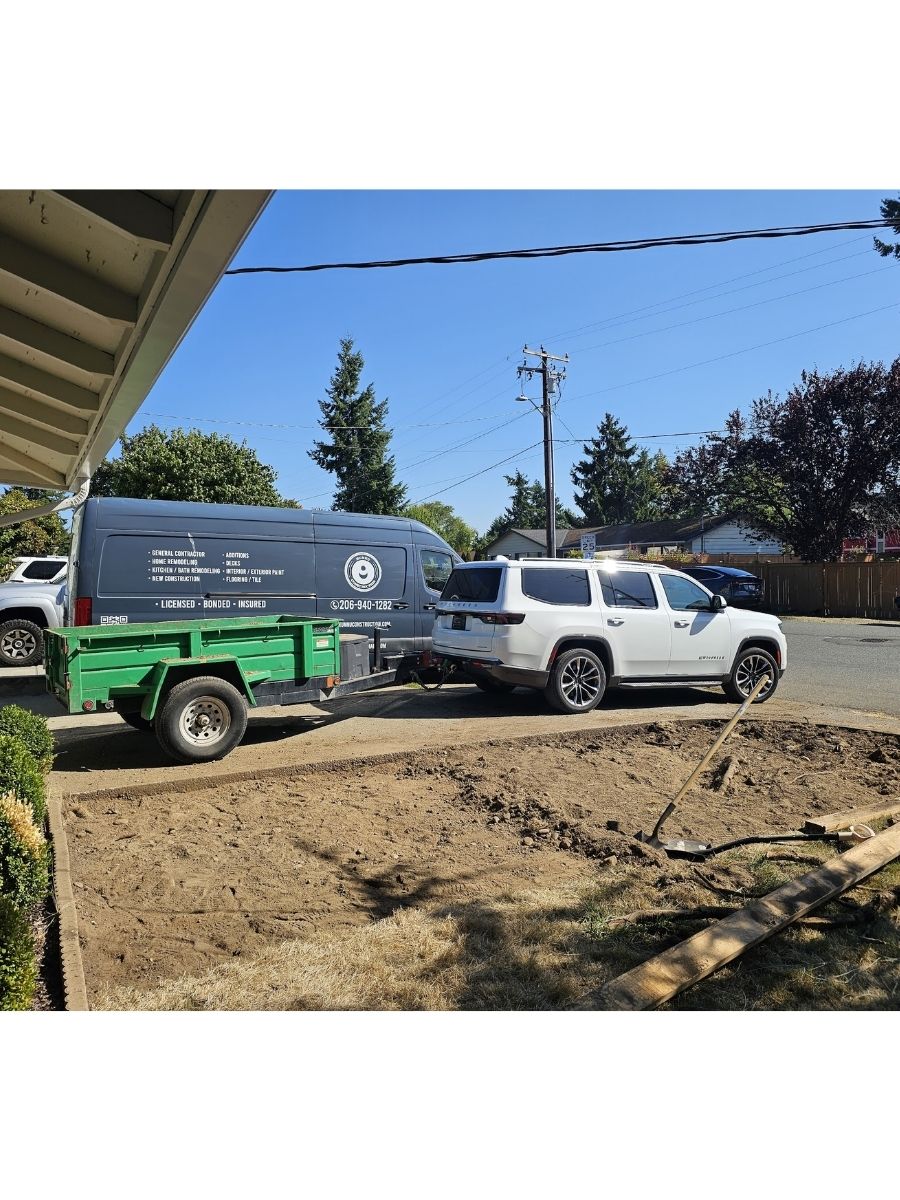
“How do you handle changes during the project?” This is where a lot of remodels go sideways. Change orders are normal — kitchens have surprises. But you need a contractor who has a clear, written process for handling them. Verbal agreements during a remodel are a recipe for disputes. Ask to see a sample change order form before you sign anything.
And ask this one plainly: “Are you licensed and insured in Washington State?” Washington requires general contractors to be registered with the Department of Labor and Industries. You can verify this yourself at the L&I contractor lookup. Don’t take their word for it. A legitimate contractor will not flinch when you ask.
One more question most people forget: “What’s your process when something goes wrong?” Not if — when. Pipes get nicked. Tile orders come in wrong. Permits take longer than expected. A contractor with a clear answer here has been through it and handled it. A contractor who stumbles over the question may not have a plan at all.
Look, the interview stage is your best leverage. Once work starts and your cabinets are out, your negotiating position changes completely. Spend the time now asking hard questions. The right contractor will respect you more for it — and the wrong one will reveal themselves before you write a single check.
Watch Our Video
See How We Handle How to Hire a General Contractor for a Kitchen Remodel: Expert Advice and Red Flags to Avoid in Bellevue
Red Flags That Signal You Should Walk Away From a Contractor
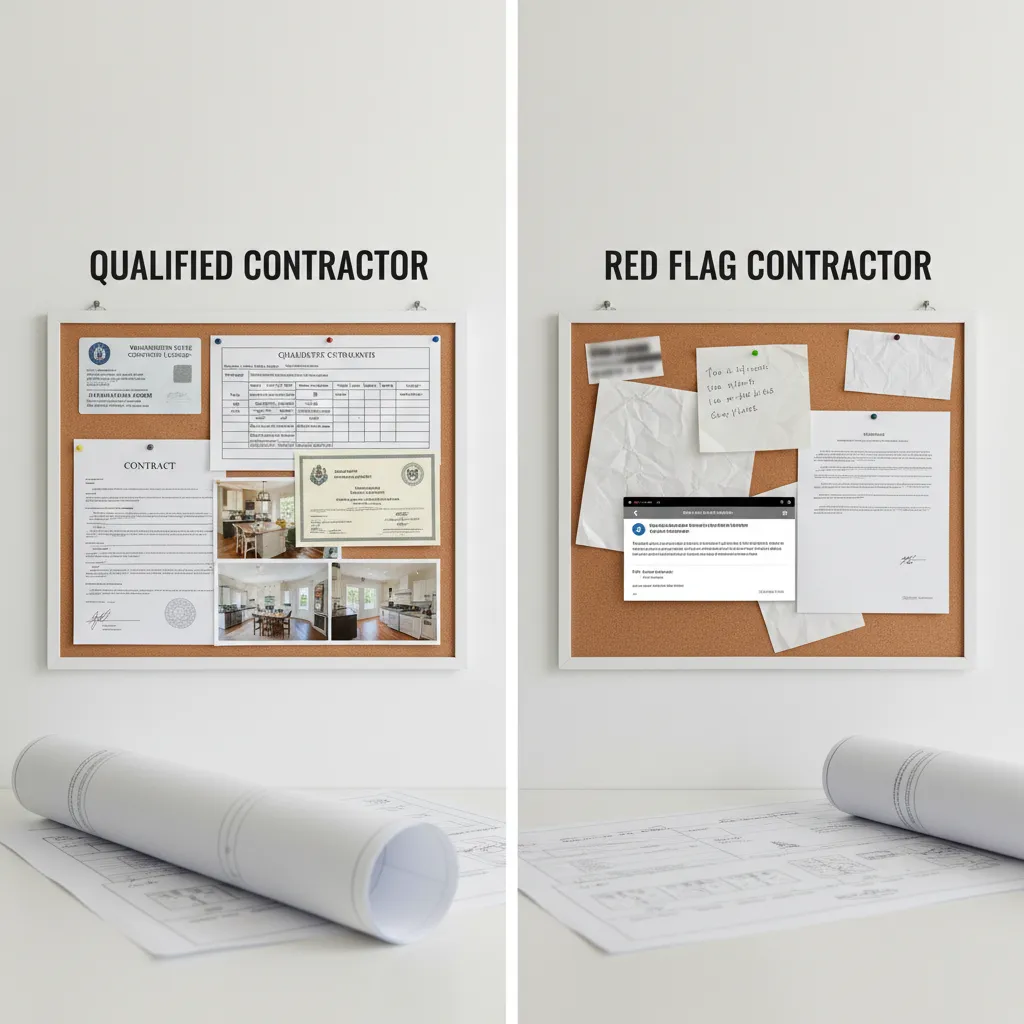
Most homeowners focus on finding a good contractor. But knowing when to walk away from a bad one might save you more money and stress. We see this constantly in Bellevue — someone calls us after a nightmare job, and the warning signs were there from the very first conversation.
Here is what to watch for before you sign anything.
They ask for a large upfront payment. A contractor who wants 50% or more before work begins is a red flag. Legitimate contractors typically request a modest deposit — often 10–30% depending on the project scope — with the rest tied to milestones. According to the Washington State Attorney General’s Office, demanding excessive upfront cash is one of the most common patterns in contractor fraud.
We worked with a homeowner on the Eastside last spring who had already paid a contractor $8,000 before a single cabinet was removed. The contractor disappeared two weeks in. That story is not rare.
They pressure you to decide today. “This price is only good until Friday” is a sales tactic, not a business practice. A real contractor has a full schedule. They don’t need to manufacture urgency. If someone is pushing you to sign before you’ve had time to check references or review the contract, that pressure is the point. Walk away. Knowing warning signs before hiring a contractor can help you spot these tactics early and protect your investment.
No license or proof of insurance. In Washington State, general contractors are required to be registered with the Department of Labor and Industries. You can verify this at verify.lni.wa.gov. If a contractor cannot hand you their registration number or hesitates when you ask, that is your answer. No license also means no bond — which means you have no financial protection if something goes wrong on your property.
This one matters more than people realize. We have seen kitchen remodels in Bellevue get tied up for months because an unlicensed sub did electrical work that failed inspection. The homeowner had to pay a licensed electrician to redo the entire job.
The estimate is vague or verbal only. A written, itemized estimate is not optional. If a contractor hands you a number on a sticky note or says “we’ll figure it out as we go,” that is not a plan — that is an open door to surprise charges. Every scope of work, material list, and timeline should be in writing before work starts.
They can’t give you references from similar projects. Kitchen remodels are specific. A contractor who has only done decks and fences is not automatically qualified to manage a full kitchen gut and rebuild. Ask for two or three references from kitchen projects completed in the last 18 months. Then actually call them. Most people don’t. The ones who do almost always learn something useful. If you’re seeing these signs in your current conversations, it may be time to explore a licensed kitchen remodel contractor in Bellevue who can walk you through the process the right way.
Their communication is already a problem. If a contractor takes four days to return a call during the bidding phase, imagine what happens when there’s an issue mid-project. Slow response, vague answers, or a habit of going quiet — those patterns only get worse once they have your deposit.
Look — some of these flags seem obvious when you read them in a list. But in a real conversation, with someone who seems friendly and confident, they’re easy to miss. Slow down. Check the license. Read the contract. Call the references. And if something feels off, trust that feeling. We have never heard a homeowner say, “I wish I had ignored that red flag.”
A solid contractor will not be bothered by your questions. They will expect them.
Now that you know what to look for, let us handle it. Our team has managed across Bellevue and the Eastside — and we bring this same level of scrutiny to every project we take on. You’ve done the homework. We’ll do the work. Call us at +1-425-696-3311 or schedule a consultation online and let’s talk through your kitchen.
Frequently Asked Questions
Common questions about how to hire a general contractor for a kitchen remodel: expert advice and red flags to avoid services in Bellevue
How do I know if a general contractor is licensed to work in Bellevue?
You can verify a contractor’s license through the Washington State Department of Labor & Industries website before you hire anyone. Every GC working in Bellevue must hold a valid state contractor’s license and carry liability insurance. Ask for their license number and look it up yourself — don’t just take their word for it. The City of Bellevue also requires permits pulled under a licensed contractor’s name. If someone asks you to pull your own permits, that’s a red flag.
What is the biggest mistake homeowners make when hiring a kitchen remodel contractor?
The biggest mistake is choosing a contractor based on the lowest bid without checking their references or verifying their license. A low number looks good on paper, but it often means corners will get cut — or the price will climb once demo starts. Get at least three quotes. Ask each contractor the same questions. Compare what’s included, not just the total. Our guide on how to hire a general contractor for a kitchen remodel covers exactly what to look for before you sign anything.
Does Bellevue require permits for a kitchen remodel?
Yes, most kitchen remodels in Bellevue require permits — especially if you’re moving plumbing, adding electrical circuits, or changing a layout. Permits are pulled through the City of Bellevue Development Services. A licensed general contractor handles this process for you. Skipping permits can cause serious problems when you sell your home or during a future inspection. This is one area where hiring a qualified GC pays for itself — they know which inspections are required and when.
When should I hire a general contractor instead of managing trades myself?
Hire a general contractor any time your kitchen remodel involves more than one trade — plumbing, electrical, or structural work. Managing trades yourself might seem like a way to save money, but without someone owning the schedule, jobs fall out of order fast. One trade showing up too early can undo another’s work. In Bellevue, older homes add another layer of complexity — cast iron pipes, outdated wiring, and uneven subfloors are common surprises. A GC carries that field knowledge so you don’t pay for it the hard way.
What red flags should I watch for during a contractor walkthrough?
Watch out for contractors who can’t answer basic questions about permits, who pressure you to decide on the spot, or who ask for a large upfront payment before work starts. Vague timelines and no written schedule are also warning signs. A good contractor should walk your kitchen and ask questions — about your goals, your timeline, and what’s inside the walls. If they’re rushing through the walkthrough, they’re not planning your job carefully.
How do Bellevue’s older homes affect a kitchen remodel?
Many Bellevue homes built before the 1980s have outdated plumbing, older electrical panels, and materials that need special handling during demo. Cast iron drain lines, knob-and-tube wiring, and uneven subfloors are common in neighborhoods like Factoria and older Eastside areas. A contractor who has worked on these homes knows to look for these issues before demo starts — not after. That experience changes what gets budgeted and how the project gets scheduled from day one.
Call Hunnu Construction
Schedule your free consultation today!
Transform your outdated Bellevue kitchen into the space you've always wanted.
Monday 8 a.m.–6 p.m.
Tuesday 8 a.m.–6 p.m.
Wednesday 8 a.m.–6 p.m.
Thursday 8 a.m.–6 p.m.
Friday 8 a.m.–6 p.m.
Saturday 8 a.m.–6 p.m.
Sunday 10 a.m.–5 p.m.
Links
Terms of Use
Privacy Policy
Cookie Policy
Menu
© 2026. Hunnu Construction LLC. All Rights Reserved.