


Call or Text
How to Find Affordable Professional Help for a Kitchen Remodel on a Tight Budget
How to Find Affordable Professional Help for a Kitchen Remodel on a Tight Budget in Bellevue — Trusted by your neighbors.
Fast, honest service with upfront pricing.

Our team is here to answer your questions and help you get started on turning your vision into reality.
How to Find Affordable Professional Help for a Kitchen Remodel on a Tight Budget

You’ve been Googling for hours, trying to figure out if a kitchen remodel is even possible on your budget — or if “affordable professional help” is just a myth. It’s not. But finding it takes more than collecting a few quotes and hoping for the best.
How to Find Affordable Professional Help for a Kitchen Remodel on a Tight Budget is exactly what this guide covers, and it’s written by people who’ve seen what works in Bellevue kitchens and what quietly costs homeowners thousands more than it should.
The difference between a remodel that stretches your budget and one that breaks it usually comes down to three things: how you define affordable, where you look for contractors, and which costs you can actually control. Let’s get into it.
What’s Covered on This Page
Understanding What ‘Affordable’ Really Means for a Kitchen Remodel
Key Ways to Find Qualified Kitchen Remodel Contractors at Lower Cost
How do I know when to hire a professional instead of doing kitchen work myself?
Does Bellevue have any specific rules that affect kitchen remodel costs?
What is the biggest mistake homeowners make when trying to find affordable kitchen remodel help?
What does a realistic affordable kitchen remodel budget actually need to include?
Can I really get quality kitchen remodel work done on a tight budget in Bellevue?
Where is the best place to start looking for affordable kitchen contractors in Bellevue?
Understanding What ‘Affordable’ Really Means for a Kitchen Remodel
Most people searching for how to find affordable professional help for a kitchen remodel on a tight budget start with the wrong question. They ask “how cheap can I go?” instead of “where does my money actually matter?” Those are very different questions. And the answer shapes everything about how your project turns out.
“Affordable” doesn’t mean the lowest number on a quote. It means the best outcome for what you spend. This comes up constantly — homeowners in Bellevue who chose the cheapest bid and ended up spending more to fix what went wrong than they would’ve paid a mid-range contractor the first time.
The Difference Between Cheap and Cost-Effective
A cheap remodel cuts corners on labor, materials, or both. A cost-effective remodel is strategic. It spends money where it counts — plumbing rough-in, electrical work, structural changes — and pulls back where it doesn’t, like cabinet hardware or decorative tile accents.
According to the National Kitchen and Bath Association, labor typically accounts for 20–35% of total kitchen remodel costs. That’s a big chunk. But it’s also the one area where cutting too deep causes the most damage. Bad tile work, improper venting, or a poorly wired circuit aren’t just ugly — they’re code violations. The kind that can delay a home sale or trigger an insurance claim.
A kitchen in the East Bellevue area last year had a previous contractor who’d skipped a permit on a gas line relocation. The homeowner had no idea until they listed the house. That “affordable” job ended up costing far more to remediate than the original savings.
What Your Budget Actually Needs to Cover
Here’s what most budget guides skip over: your remodel budget has to account for more than the visible work. Permits, inspections, debris removal, and temporary kitchen setup costs are real expenses. In Bellevue, the City of Bellevue Building & Planning department requires permits for most structural, electrical, and plumbing changes [SOURCE TBD: City of Bellevue permit requirements]. Skipping that step isn’t a savings — it’s a liability.
A realistic affordable kitchen remodel budget includes:
Labor for licensed trades (plumbing, electrical, general)
Permit and inspection fees
Materials — cabinets, countertops, fixtures
A contingency buffer, typically 10–15% of total project cost
That contingency line is the one homeowners push back on most. But in older homes — and Bellevue has plenty built between the 1960s and 1980s — you open a wall and find knob-and-tube wiring or cast iron drain lines that need updating. Without that buffer, the project stalls. Or you start making cuts in the wrong places.
Scope Is Where You Actually Control Cost
The single most powerful tool a budget-conscious homeowner has is scope control. Not squeezing the contractor. Not buying cheaper cabinets. Scope.
Deciding to reface cabinets instead of replacing them, keeping the sink in its current location, or choosing stock cabinet sizes instead of custom — these decisions can reduce a project’s cost by 30–40% without sacrificing quality of work. Experts at Houzz also outline practical ways to save on your kitchen remodel that align with this kind of strategic scope thinking. The contractor does less, charges less, and the quality of what gets done stays high.
Think of it this way: a skilled contractor doing a focused, well-scoped job is almost always a better outcome than a lower-cost contractor doing a sprawling one. There are $40,000 kitchens that feel cheap because the scope was too ambitious for the budget. And there are tight, well-planned remodels that look like twice the money.
Affordable is a strategy. It starts before you call anyone. Get clear on what your kitchen actually needs — not what a showroom made you want — and you’ll be in a much stronger position to find professional help that fits your real budget. If you’re at that stage and want a realistic conversation about scope and cost, it may be worth connecting with a kitchen remodel contractor in Bellevue who can walk through the numbers with you before anything is committed.
Key Ways to Find Qualified Kitchen Remodel Contractors at Lower Cost

Most guides tell you to “get three quotes and compare.” Fine advice. But it barely scratches the surface. If you’re serious about how to find affordable professional help for a kitchen remodel on a tight budget, you need to think about where you’re looking — not just how many bids you collect.
Start with your local permit office. In Bellevue, contractors who pull permits regularly are easy to verify. The City of Bellevue’s Development Services portal shows permit history by contractor name. A pro who shows up consistently in that system has a real track record — and that transparency often matters more than a flashy website.
This comes up constantly: homeowners skip the permit search entirely, then end up hiring someone who’s never worked under a licensed inspector. That’s a risk you don’t need to take when the data is free and public.
Neighborhood referral networks are underrated. Nextdoor and local Facebook groups for Bellevue neighborhoods like Crossroads or Somerset regularly surface contractors who’ve done real work nearby. These aren’t anonymous reviews — they’re neighbors who can show you the finished kitchen. That’s a different level of accountability than a five-star rating on a national platform.
But here’s what most guides get wrong: they treat all referrals the same. A referral from someone who hired a contractor for a full gut renovation isn’t the same as one from someone who only had countertops swapped. Match the referral to the scope of your project. Ask specifically, “Did they do the demo, plumbing rough-in, and tile work, or just the cabinets?”
Trade schools and apprenticeship programs are a real option. Contractors who supervise trade school graduates sometimes offer lower labor rates because they’re mentoring newer workers under licensed oversight. According to the Associated Builders and Contractors, apprenticeship programs are active across Washington State. The work still gets inspected. Quality is still accountable. But the labor cost structure is different.
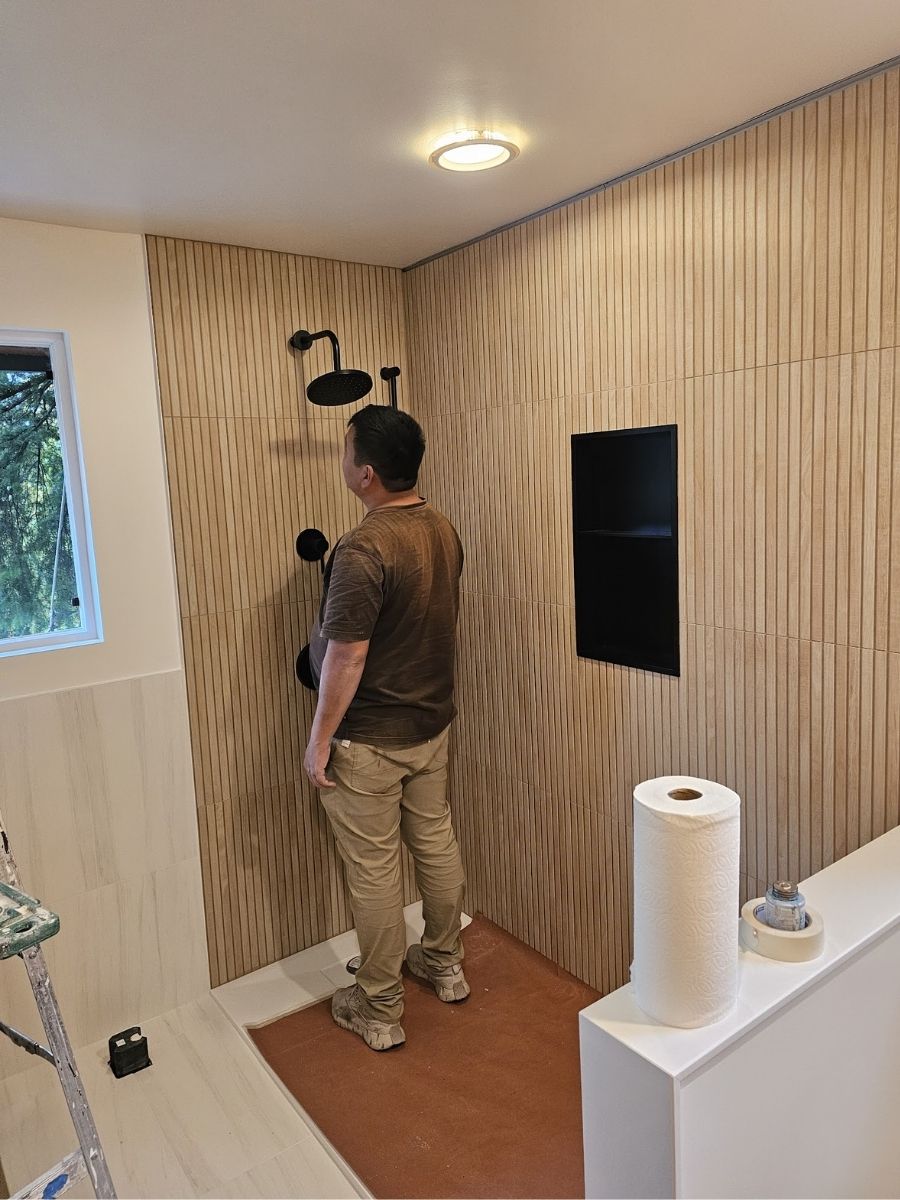
Last spring, a Bellevue homeowner found her contractor through a local tile supplier on 156th Ave. The supplier knew which contractors moved volume — meaning they buy materials regularly and keep costs lean. That kind of insider connection isn’t listed anywhere online. Walk into a kitchen and bath supply house, tell them your project scope, and ask who they’d call. You’ll get names you won’t find on Google.
Timing matters more than people realize. Contractors in the Pacific Northwest tend to be slower between November and February. That slowdown means more flexibility on scheduling — and sometimes on price, because they’d rather keep a crew working than sit idle. If your project can wait until late fall, you may have more negotiating room simply because the calendar works in your favor.
One more thing worth knowing: general contractors aren’t always the right hire for a budget remodel. Sometimes a skilled kitchen designer who also manages subcontractors — without the full GC markup — can deliver the same result at a lower overall cost. This works best when the scope is clear and the homeowner is willing to stay involved. Not for everyone. But it’s a real path that budget-focused remodelers in Bellevue use more than you’d think.
The common thread across all of these approaches is doing the homework before you make a call. Verify licenses through the Washington State Department of Labor and Industries contractor lookup. Check permit history. Ask for project-specific references. The contractors who hold up to that scrutiny are the ones worth your time — and they’re often more affordable than you’d expect precisely because they don’t need to spend heavily on marketing to get work. Having guided hundreds of Bellevue homeowners through this exact process, we’ve found that the vetting stage is where budget remodels are won or lost.
Smart Ways to Reduce Labor Costs Without Cutting Corners

Labor is usually the biggest line item in any kitchen remodel. According to the National Kitchen and Bath Association, labor can account for 20–35% of total project costs. That number stings. But there are real, practical ways to bring it down — without hiring someone who disappears halfway through the job.
The move most people miss? Separating the work into phases before you ever call a contractor.
When you bundle everything together and ask for one big bid, you lose visibility into where the money actually goes. This comes up constantly on jobs in Bellevue — homeowners hand over a full scope, get a lump-sum number, and have no idea what’s driving the price. Break it apart. Ask for line-item quotes on demo, cabinet installation, tile, and finish work separately. You’ll immediately see which trades are expensive and where you have room to self-perform.
Do Your Own Demo
Demolition is the easiest labor category to take back yourself. Pulling out old cabinets, removing tile backsplash, disconnecting a range hood — most handy homeowners can handle these tasks in a weekend. Contractors charge real money for demo — often at the same hourly rate as skilled installation work. Do it yourself, and you hand them a clean slate and a smaller invoice.
One thing most guides get wrong here: they tell you to “just demo the cabinets.” But if your home was built before 1980, you need to test for lead paint and asbestos before you touch anything. In Washington State, this falls under the Washington State Department of Labor and Industries guidelines for renovation work. Don’t skip it. A quick test kit from a hardware store costs almost nothing compared to what remediation costs if you disturb something you shouldn’t.
Hire Specialists, Not Generalists
A general contractor who “does everything” often marks up subcontractor labor by a lot. On some Bellevue kitchen jobs, the GC was billing 25–40% on top of what the sub actually charged. That’s their right — they’re managing the project. But if your remodel is straightforward, you may not need full GC oversight.
Instead, hire a licensed electrician directly for the electrical rough-in. Hire a licensed plumber for the sink and dishwasher connections. Then bring in a skilled cabinet installer for the boxes and doors. You coordinate the schedule. You save the markup. Yes, this takes more of your time. But on a tight budget in a city where skilled trades run high, it’s one of the most effective levers you have.
Time the Job Strategically
Contractors in the Pacific Northwest — Bellevue included — tend to be slammed from late spring through early fall. That’s when everyone wants their project done. Scheduling your kitchen remodel for late fall or winter often means shorter wait times and more negotiating room on labor rates. Some clients save meaningful amounts simply by being flexible on start date. A contractor with a gap in their November schedule is far more motivated to work with you than one booked solid through August.
And look — flexibility on your end costs you nothing. If your kitchen is functional and you’re not in crisis mode, waiting two months for the right contractor at the right rate is almost always worth it. When you’re ready to have that conversation, the team behind this guide offers free consultations for Bellevue homeowners looking for affordable professional help with a kitchen remodel on a tight budget — no pressure, just a straight look at your scope and options.
Supply Your Own Materials
Most contractors mark up materials they source — sometimes 10–20% above what you’d pay directly. Purchase your own tile, cabinet hardware, faucets, and light fixtures, and you cut that markup entirely. The contractor installs what you provide. Just confirm with them upfront that they’re comfortable with owner-supplied materials, and get that agreement in writing before work starts.
This one move alone can offset a surprising amount of labor cost on a mid-size kitchen remodel.
Now that you know what to look for — and what to avoid — our team has helped Bellevue homeowners navigate from first call to finished kitchen, with no surprises along the way. Call us at +1-425-696-3311 or schedule a free consultation online. You’ve done the homework. Let’s put it to work.
Frequently Asked Questions
Common questions about how to find affordable professional help for a kitchen remodel on a tight budget services in Bellevue
How do I know when to hire a professional instead of doing kitchen work myself?
Hire a professional any time the work involves plumbing, electrical, or gas lines. These aren’t just hard to do — they require licensed contractors under Bellevue’s permit rules. DIY is fine for painting cabinets or swapping hardware. But if you open a wall or move a fixture, you need a licensed pro. Skipping that step can create code violations that show up later when you sell your home. The risk isn’t worth the short-term savings.
Does Bellevue have any specific rules that affect kitchen remodel costs?
Yes — the City of Bellevue Building and Planning department requires permits for most structural, electrical, and plumbing changes. That adds to your upfront cost, but it protects you long-term. Many Bellevue homes were built between the 1960s and 1980s, so older wiring or cast iron pipes are common surprises. Knowing this before you start helps you set a realistic budget with a 10–15% contingency buffer. A contractor familiar with Bellevue’s permit process can help you plan for these costs early.
What is the biggest mistake homeowners make when trying to find affordable kitchen remodel help?
The biggest mistake is choosing the lowest bid without checking permit history. A cheap quote often means skipped permits or unlicensed work. One homeowner in the East Bellevue area found out the hard way — a previous contractor skipped a permit on a gas line, and it cost far more to fix than the original savings. You can check contractor permit history free through the City of Bellevue’s Development Services portal. That one step can save you thousands.
What does a realistic affordable kitchen remodel budget actually need to include?
A realistic budget covers more than just materials and labor. You also need to plan for permit and inspection fees, debris removal, and a contingency buffer of 10–15% of your total project cost. That buffer matters most in older Bellevue homes where surprises inside walls are common. Most homeowners push back on the contingency line — until they need it. If you want help building a budget that actually holds, a kitchen remodel contractor in Bellevue can walk through the numbers with you before anything is committed.
Can I really get quality a remodel work done on a tight budget in Bellevue?
Yes — but it comes down to scope control, not just price shopping. Keeping your sink in its current location, choosing stock cabinet sizes, or refacing instead of replacing can cut project costs by 30–40% without lowering the quality of work done. Affordable is a strategy, not just a number. A well-scoped remodel with a skilled contractor almost always beats a sprawling project with a cheaper one. Get clear on what your kitchen actually needs before you call anyone.
Where is the best place to start looking for affordable kitchen contractors in Bellevue?
Start with the City of Bellevue’s Development Services portal, not a search engine. Contractors who pull permits regularly show up in that system — and that track record is more reliable than reviews alone. It’s free to check and takes minutes. From there, ask neighbors in your area who they’ve used. Word of mouth in Bellevue neighborhoods tends to surface contractors who do consistent, inspected work. Three verified quotes from permit-active contractors will tell you far more than five quotes from unknown sources.
Call Hunnu Construction
Schedule your free consultation today!
Transform your outdated Bellevue kitchen into the space you've always wanted.
Monday 8 a.m.–6 p.m.
Tuesday 8 a.m.–6 p.m.
Wednesday 8 a.m.–6 p.m.
Thursday 8 a.m.–6 p.m.
Friday 8 a.m.–6 p.m.
Saturday 8 a.m.–6 p.m.
Sunday 10 a.m.–5 p.m.
Links
Terms of Use
Privacy Policy
Cookie Policy
Menu
© 2026. Hunnu Construction LLC. All Rights Reserved.