


Call or Text
In What Order Should You Renovate a Kitchen for the Best Results?
In What Order Should You Renovate a Kitchen for the Best Results? in Bellevue — Trusted by your neighbors.
Fast, honest service with upfront pricing.

Our team is here to answer your questions and help you get started on turning your vision into reality.
In What Order Should You Renovate a Kitchen for the Best Results?
What’s Covered on This Page
In What Order Should You Renovate a Kitchen for the Best Results?
What is the correct order to renovate a kitchen?
Do I need permits to renovate a kitchen in Bellevue?
What happens if you renovate a kitchen in the wrong order?
Should I hire a professional or manage my kitchen renovation myself in Bellevue?
Is asbestos a concern in older Bellevue homes being renovated?
What is the biggest mistake people make when planning a kitchen renovation?
In What Order Should You Renovate a Kitchen for the Best Results?
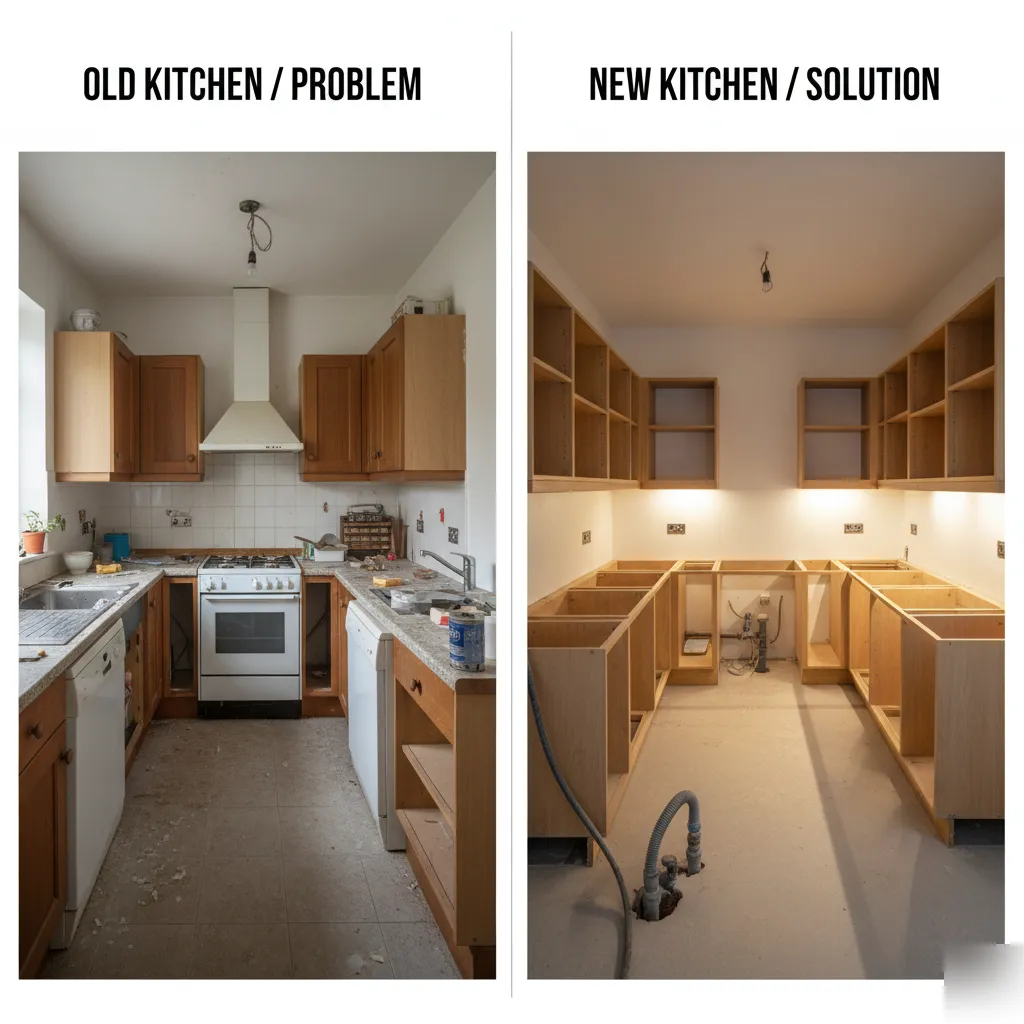
Your kitchen renovation is already mapped out in your head — but something keeps nagging at you. What actually happens first? If you get the sequence wrong, do you pay for it later? That instinct to ask in what order should you renovate a kitchen for the best results before you start swinging hammers? Trust it. Most kitchen projects that go sideways don’t fail because of bad materials or wrong choices. They fail because work gets done in the wrong sequence. We see this constantly on jobs across Bellevue — a homeowner installs new flooring before the plumber comes in, and now those beautiful hardwoods have boot scuffs and a subfloor gouge before the cabinets even arrive.
The sequence matters more than almost any other decision you’ll make. Get it right, and every trade builds cleanly on the last. Get it wrong? You’re paying twice for work that should have been done once.
Start With the Plan — Not the Demo
Before anyone swings a hammer, you need a complete set of decisions locked in. Cabinet layout. Appliance sizes. Plumbing and electrical rough-in locations. Countertop material. All of it. This sounds obvious — but we’ve walked into jobs where demo was already done and the homeowner still hadn’t picked a refrigerator, which means the electrician can’t place the outlet and the cabinet company can’t finalize the run.
Planning is the phase where you save money. Every change you make after rough-in costs more than the same change made on paper. According to the National Kitchen and Bath Association, design changes made after construction begins can add 10–25% to total project costs [SOURCE TBD: NKBA industry data]. That’s not a small number.
In Bellevue, pull your permits before demo starts — not after. King County and the City of Bellevue require permits for most work that touches electrical, plumbing, or structural elements [Source: City of Bellevue Development Services, https://bellevuewa.gov/city-government/departments/development-services]. Skipping this step doesn’t save time. It creates problems at resale and can force you to open walls you just closed.
Firsthand note: We had a client in the Crossroads neighborhood last spring who had already demoed her kitchen before calling us. No permits pulled, no plan finalized. We spent the first two weeks just catching the project up to where it should have started — a situation our team, having managed hundreds of kitchen renovations across Bellevue, recognizes immediately and knows how to recover from.
Step One: Demolition and Structural Work
Once your plan is locked and permits are in hand, demo comes first. Strip out the old cabinets, remove the flooring if it’s going, pull the old appliances. If you’re moving walls or adding a window, that structural work happens here too — before any new systems go in.
Here’s what most guides get wrong about demo: they treat it like a single step. It’s not. Selective demo matters. You don’t always rip everything out. Sometimes you’re keeping existing plumbing locations to save cost. Sometimes a wall comes down but the ceiling stays. Know what you’re protecting before the crowbars come out.
If asbestos or lead paint is a concern — and in homes built before 1980 in Bellevue, it often is — testing and abatement happen before any demo work begins [Source: Washington State Department of Ecology, https://ecology.wa.gov]. Non-negotiable. We’ve seen jobs delayed two weeks because this step got skipped and then flagged mid-project. If you’re planning a kitchen renovation in a rental or shared space, reviewing apartment renovation rules before starting demo can help you avoid costly compliance issues.
Step Two: Rough-In Work — Plumbing, Electrical, HVAC
This is the phase that determines everything downstream. Rough-in means running new pipes, wires, and ductwork before the walls close. It has to happen here because all of it lives inside your walls and ceiling — and once drywall goes up, accessing any of this becomes a major repair job.
Plumbing rough-in first. Then electrical. Then HVAC if you’re adding or relocating a vent. Pipes need gravity and specific slope to drain properly. They’re also the hardest to reroute once set. Electrical is more flexible, but it still needs to be placed before insulation and drywall.
We spend more time on this phase than any other. A job we did off 116th Ave last fall had an older home with knob-and-tube wiring still feeding part of the kitchen. Catching that during rough-in — not after cabinets were in — saved the homeowner a full cabinet removal and reinstall. That’s the kind of thing that only shows up when you’re in the walls. If you’re working through a similar situation and want a second set of experienced eyes before rough-in begins, it may be worth talking to a kitchen remodeling professional in Bellevue before your trades schedule gets locked in.
According to the International Association of Certified Home Inspectors, electrical issues are among the most common deficiencies found in kitchen renovations [SOURCE TBD: InterNACHI inspection data]. Rough-in is where you fix them permanently. Not patch them.
One more thing on rough-in: get your inspections scheduled right after each trade finishes. In Bellevue, inspection wait times can run several days. If you wait until the last minute to call, you’re sitting idle while your project clock keeps running.
Step Three: Drywall, Insulation, and Prep
After inspections pass, close the walls. Insulation goes in first where needed — especially on exterior walls and around any new windows. Then drywall, tape, mud, and sand.
This step feels like a pause. Nothing looks like a kitchen yet. But this is where the foundation for everything visible gets set. Walls that aren’t flat and plumb create real problems when cabinets go in — we’ve seen installers spend an extra four hours shimming and scribing because the drywall work was rushed. That adds cost and delays your whole schedule.
Prime the walls before cabinets arrive. Not after. Rolling primer on an open wall is easy. Cutting in around cabinet boxes? Miserable. Small thing. Big time saver.
Step Four: Cabinets, Then Countertops
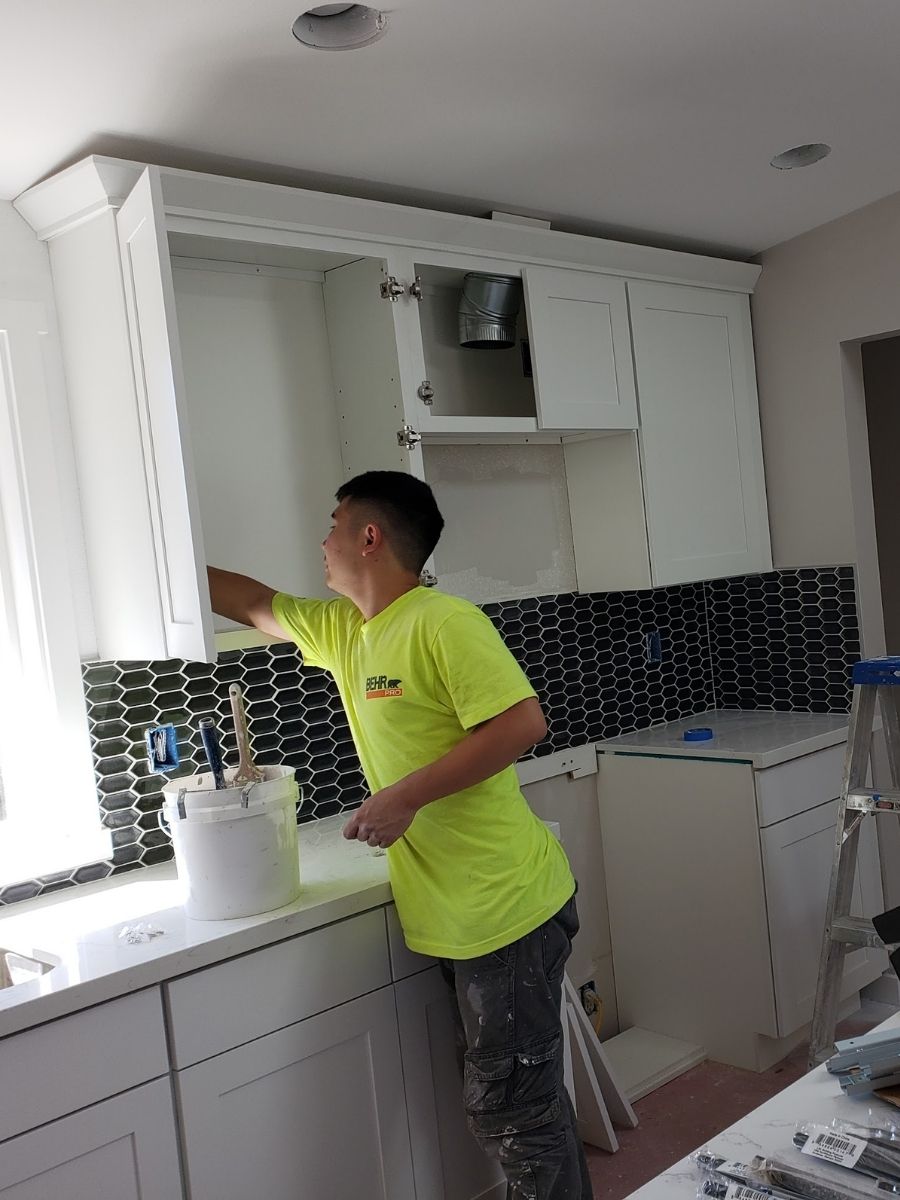
Cabinets come before countertops. Always. Countertops are templated and cut to fit the exact cabinet installation — so if you template before cabinets are set, your measurements are wrong. We’ve seen this mistake made by homeowners who ordered countertops early thinking they were getting ahead. They weren’t.
Cabinet installation is also the step where level matters most. Kitchens are rarely perfectly level — especially in older Bellevue homes where settling has happened over decades. A good installer finds the high point of the floor, sets that cabinet first, and works out from there. Every cabinet gets shimmed to level. Rush this step, and your countertop won’t sit flat and your doors won’t hang right.
After cabinets are set and secured, the countertop company comes in to template. Then fabrication — typically 1–2 weeks for stone [SOURCE TBD: stone fabricator lead time data]. Then installation. Only after countertops are installed does your plumber come back to set the sink, hook up the garbage disposal, and connect supply lines.
Firsthand note: On a recent project in the West Bellevue area, the countertop template appointment got pushed back three days because cabinet installation ran long. Building a buffer into your schedule here is worth it — countertop fabricators don’t hold your slot if you’re not ready.
The Better Business Bureau is useful, but not for the reasons most people think. Don’t just look at the letter grade. Look at the complaint history and — more importantly — how the company responded. A business with two resolved complaints and professional responses tells you more than a business with a clean record and no reviews at all.
Local building supply showrooms are an underused resource. Showrooms in the Bellevue and Kirkland area often have contractor relationships. The staff there see which remodelers come in regularly, treat their clients well, and actually know what they’re specifying. Ask the showroom team who they’d call if it were their own kitchen. That question gets you real answers.
Social media has a place here too. Nextdoor is genuinely useful for hyperlocal recommendations. A post asking for kitchen remodeler referrals in your specific neighborhood will surface names you won’t find any other way. Facebook neighborhood groups work the same way. These aren’t curated platforms — people post complaints just as fast as compliments, which makes the positive mentions more trustworthy.
The goal at this stage isn’t to build a list of twenty names. You want three to five remodelers who have verifiable credentials, real project photos in your area, and at least one warm referral you can follow up on. That’s a workable shortlist. Everything after this — the interviews, the estimates, the contract review — gets easier when you start with the right pool of candidates.
Step Five: Appliances, Flooring, Backsplash, and Finish Work
Here’s where the sequence gets a little more flexible — but not completely. A few things are set:
Flooring goes in before appliances are set in place, but after cabinets. You want flooring to run under the toe kicks, not around them.
Backsplash goes in after countertops are installed. The tile needs to sit on top of the counter surface, not behind it.
Appliances get set after flooring is down, so you’re not dragging a range across new hardwood or LVP.
Finish electrical — outlets, switches, light fixtures — happens after drywall is painted and before appliances are final-connected.
Cabinet hardware goes on last. It’s the easiest step to rush and the one most likely to get dinged if you install it too early.
Paint is the one step people argue about. We paint after drywall is primed, before cabinets, and then touch up after everything else is done. That’s it. Trying to paint around installed cabinets and appliances is miserable work — and it shows.
Lighting is worth slowing down on. Under-cabinet lighting needs to be wired during rough-in if it’s hardwired — you can’t add it cleanly after cabinets are installed without tearing into the wall above. Pendant lighting over an island needs a junction box set during rough-in at exactly the right location. These decisions have to be made early, even though the fixtures go in late.
According to Houzz’s annual Kitchen Trends Study, lighting upgrades are among the top three most impactful changes homeowners report after a kitchen renovation [SOURCE TBD: Houzz Kitchen Trends Study]. And yet it’s one of the most commonly under-planned elements we see on job sites.
The Final Sequence at a Glance
Plan, permits, and material selections
Demo and structural work
Plumbing, electrical, and HVAC rough-in
Inspections
Insulation, drywall, tape, and mud
Prime and paint walls
Cabinet installation
Countertop template, fabrication, and installation
Plumbing finish (sink, faucet, disposal)
Flooring
Backsplash
Appliance installation
Finish electrical (outlets, switches, fixtures)
Cabinet hardware and final touch-up
That’s the sequence. Every step protects the one after it. Skipping ahead feels efficient in the moment — and costs you later in rework, in damage, and in schedule delays that compound on each other.
Now that you know exactly how the sequence works, let us handle the execution. A well-planned renovation is only as good as the crew managing it — and getting the order right from day one is what we do on every job.
Frequently Asked Questions
Common questions about in what order should you renovate a kitchen for the best results? services in Bellevue
What is the correct order to renovate a kitchen?
The right order is: plan and permits first, then demo, then rough-in work (plumbing, electrical, HVAC), then drywall, then cabinets, then countertops, then flooring, then appliances and finish work. Skipping steps or doing them out of order is the most common reason kitchen projects go over budget. Each trade needs the previous step done before they can work cleanly. For a full breakdown of each phase, see our <a href=”#”>kitchen remodeling services in Bellevue</a> page.
Do I need permits to renovate a kitchen in Bellevue?
Yes — the City of Bellevue requires permits for most work that touches electrical, plumbing, or structural elements. Pull your permits before demo starts, not after. Skipping this step can create problems when you sell your home and may force you to open walls you already closed. King County and City of Bellevue Development Services both have requirements that apply depending on the scope of your project. It is not a step you can go back and add later without real consequences.
What happens if you renovate a kitchen in the wrong order?
ou end up paying twice for work that should have been done once. A common example: installing new flooring before the plumber finishes means boot scuffs, subfloor damage, and sometimes full flooring replacement. Design changes made after rough-in can add 10–25% to total project costs, according to the National Kitchen and Bath Association. The sequence protects your budget more than almost any other decision you make during the project.
Should I hire a professional or manage my kitchen renovation myself in Bellevue?
Rough-in work — plumbing, electrical, and HVAC — should always be handled by licensed professionals. In Bellevue, this work requires permits and inspections. Older homes, especially those built before 1980, may have asbestos or outdated wiring that needs professional assessment before any demo begins [Source: Washington State Department of Ecology, https://ecology.wa.gov]. You can manage some planning and finish tasks yourself, but the structural and systems phases are not good places to cut corners.
Is asbestos a concern in older Bellevue homes being renovated?
Yes, it is a real concern. Homes built before 1980 in Bellevue may contain asbestos in flooring, insulation, or wall materials. Testing and abatement must happen before any demo work begins — not after. Skipping this step can delay your project by two weeks or more if it gets flagged mid-job. Washington State Department of Ecology sets the rules for safe removal [Source: Washington State Department of Ecology, https://ecology.wa.gov]. This is one of the most common surprises we see on older Bellevue kitchen projects.
What is the biggest mistake people make when planning a kitchen renovation?
Starting demo before all decisions are finalized is the most common mistake. If you have not picked your refrigerator size, the electrician cannot place the outlet. If the cabinet layout is not locked, the plumber cannot confirm rough-in locations. Every change made after rough-in costs more than the same change made on paper. We have walked into jobs where demo was already done and major decisions were still open — recovering from that costs time and money that planning would have prevented.
Call Hunnu Construction
Schedule your free consultation today!
Transform your outdated Bellevue kitchen into the space you've always wanted.
Monday 8 a.m.–6 p.m.
Tuesday 8 a.m.–6 p.m.
Wednesday 8 a.m.–6 p.m.
Thursday 8 a.m.–6 p.m.
Friday 8 a.m.–6 p.m.
Saturday 8 a.m.–6 p.m.
Sunday 10 a.m.–5 p.m.
Links
Terms of Use
Privacy Policy
Cookie Policy
Menu
© 2026. Hunnu Construction LLC. All Rights Reserved.